
 تم التحقق من الحقائق
هل لاحظت تلك الحفر الصغيرة أو الشقوق أو الخطوط في الجرانيت وتساءلت عن ماهيتها؟ إذا كنت تخطط لمشروع أو كنت فضوليًا بشأن الحجر الطبيعي، فإن فهم هذه الميزات يمكن أن يجنبك الارتباك ويضمن أنك تتخذ خيارًا ذكيًا.
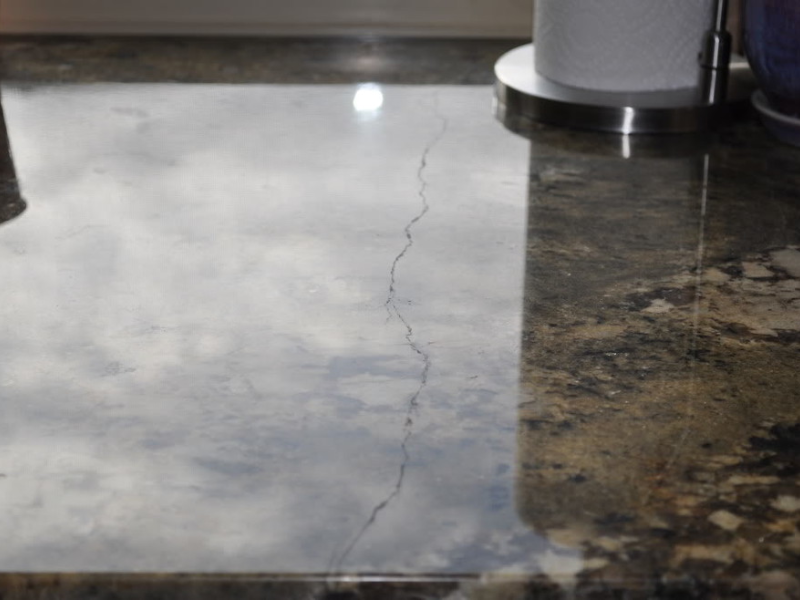
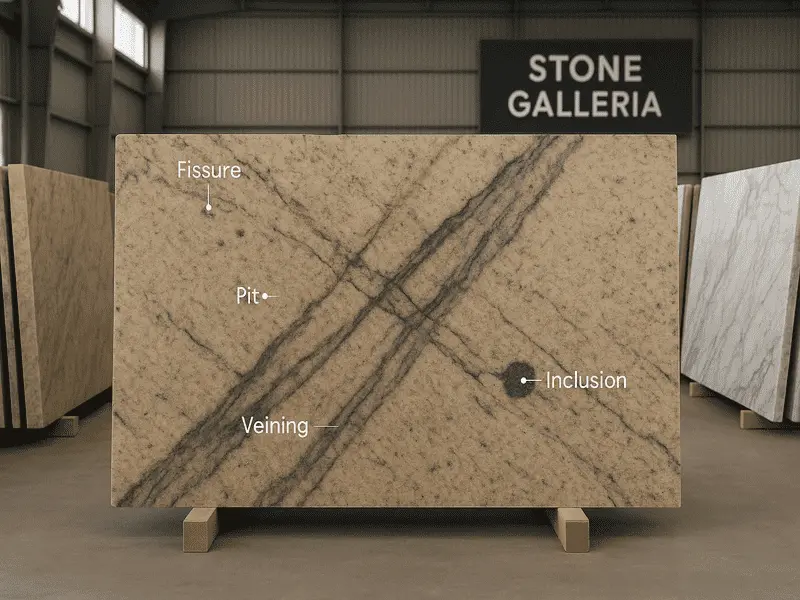
عند شراء أسطح العمل من الحجر الطبيعي، يمكن أن يكون التمييز بين الشق والفاصل أمرًا حاسمًا. الشقوق هي كسور فيزيائية، بينما الفواصل هي خطوط طبيعية تشكلت أثناء تكوين الحجر. أما الحفر، فهي ثقوب صغيرة تضيف طابعًا إلى الحجر.
في هذا المقال، سنستكشف حفر الجرانيت والشقوق مقابل الفواصل بالتفصيل، مما يساعدك على فهم الفرق بين هذه الميزات الطبيعية. في النهاية، ستكون قادرًا على اختيار الجرانيت المناسب لمشروعك بثقة وتقدير قصته الفريدة.
ما هي حفر الجرانيت؟
تشير حفر الجرانيت، المعروفة أيضًا ببساطة باسم الحفر، إلى انخفاضات صغيرة، غالبًا ما تكون ضحلة، أو ثقوب موجودة على سطح الجرانيت. يمكن أن تختلف هذه الجيوب الصغيرة في الحجم وتتشكل أثناء تكوين الجرانيت عندما تنحبس الغازات أو العناصر الأخرى في الحجر. في حين أن الحفر هي سمة طبيعية للجرانيت، إلا أنها يمكن أن تؤثر على مظهر السطح وملمسه.
مدى وضوح هذه الحفر يعتمد على كيفية إنهاء الحجر. إذا كان مصقولًا بشكل ناعم جدًا، فقد لا تلاحظها حتى. ولكن إذا كان السطح ذو تشطيب أكثر ملمسًا، فقد تبرز الحفر بشكل أكبر.
هل تتساءل ما الذي يسبب الحفر في أسطح الجرانيت وكيف يؤثر ذلك على مظهرها ومتانتها؟
أسباب حفر الجرانيت:
- التكوين الطبيعي: أثناء تكوين الجرانيت، يمكن أن تنحبس الغازات والشوائب المعدنية داخل الحجر، مما يؤدي إلى تكوين هذه الثقوب الصغيرة.
- التعدين والمعالجة: يمكن أن يؤدي التعدين ومعالجة الجرانيت أحيانًا إلى كشف أو إبراز هذه الحفر. بينما تكون موجودة بشكل طبيعي في كثير من الأحيان، يمكن لبعض عمليات المعالجة أو التشطيب أن تجعلها أكثر وضوحًا.
اقرأ أيضًا | تعدين الجرانيت: كيف يتم تعدين الجرانيت؟
المظهر والتأثير:
- الحجم والعمق: يمكن أن تختلف حفر الجرانيت في الحجم، من نقاط صغيرة إلى فجوات أكبر قليلاً. عادة ما تكون ضحلة ولا تخترق بعمق في الحجر.
- التشطيب: يمكن أن تعتمد رؤية الحفر على تشطيب الحجر. قد يخفي السطح المصقول للغاية هذه الحفر، بينما يمكن أن يجعلها التشطيب المصقول أو الملمس أكثر وضوحًا.
في معظم الحالات، خاصة لأسباب جمالية، يتم ملء الحفر خلال مرحلة المعالجة في المصنع. يتم ذلك باستخدام راتنج الإيبوكسي من خلال عملية راتنج الألواح أو مواد حشو الحجر الأخرى لإنشاء سطح أكثر نعومة.
اقرأ أيضًا | فهم عملية راتنج الألواح للأحجار الطبيعية مثل الرخام والكوارتزيت والجرانيت
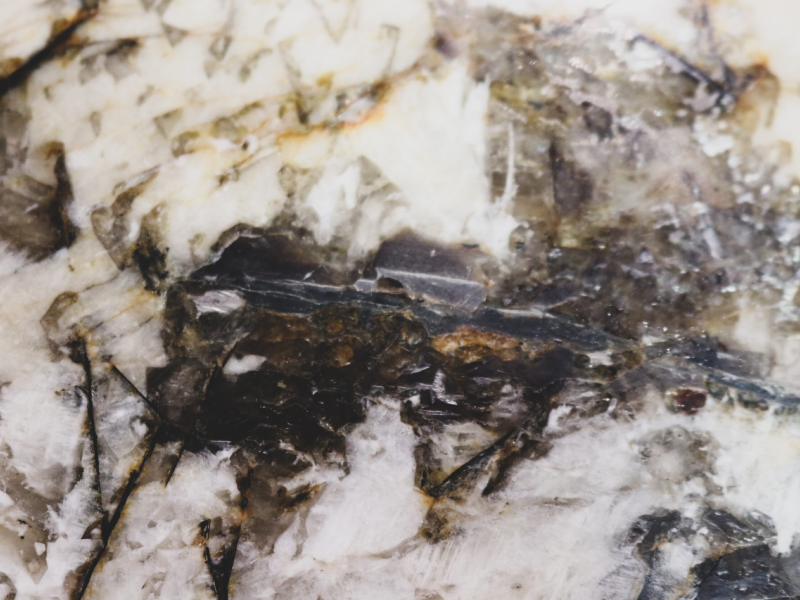 حفر الجرانيت على سطح المطبخ
ما هي شقوق الجرانيت؟
شقوق الجرانيت هي تشققات أو كسور طبيعية تظهر في حجر الجرانيت. على عكس الحفر، التي هي ثقوب صغيرة، فإن الشقوق هي خطوط أو انقسامات يمكن أن تختلف في الطول والعمق. هذه الشقوق متأصلة في الصخر وتتشكل نتيجة العمليات الجيولوجية أثناء تكوين الجرانيت.
أسباب شقوق الجرانيت
- التكوين الجيولوجي: غالبًا ما تتشكل الشقوق بسبب الضغط والحرارة الهائلة التي يتعرض لها الجرانيت في أعماق الأرض. عندما يبرد الجرانيت ويتصلب، يمكن أن تتطور فيه تشققات بسبب الإجهاد الحراري أو التغيرات الهيكلية.
- النشاط التكتوني: الحركة في قشرة الأرض يمكن أن تخلق شقوقًا في الجرانيت بينما يتكيف الصخر مع الإجهاد والضغط بمرور الوقت.
- الإجهاد الطبيعي: أثناء استخراج ومعالجة الجرانيت، يمكن أن يسبب الإجهاد الإضافي أحيانًا في جعل الشقوق الموجودة أكثر وضوحًا.
المظهر والخصائص لشقوق الجرانيت
- الحجم والعمق: يمكن أن تتراوح الشقوق من شقوق دقيقة ورفيعة إلى كسور أكبر وأكثر وضوحًا. يمكن أن تكون سطحية أو تمتد أعمق في الحجر.
- الرؤية: يمكن أن يتأثر ظهور الشقوق بتشطيب الحجر. قد تجعل الأسطح المصقولة الشقوق أقل وضوحًا، بينما قد تبرز التشطيبات الملمسة أو المصقولة وجودها.
- الأنماط: يمكن أن تظهر الشقوق في أنماط واتجاهات مختلفة، وغالبًا ما تتبع الحبيبات الطبيعية أو هيكل الجرانيت.
التأثير على الجرانيت بسبب الشقوق
- السلامة الهيكلية: في معظم الحالات، لا تؤثر الشقوق على السلامة الهيكلية للجرانيت. فهي جزء طبيعي من الحجر ولا تؤثر عادةً على متانته أو قوته.
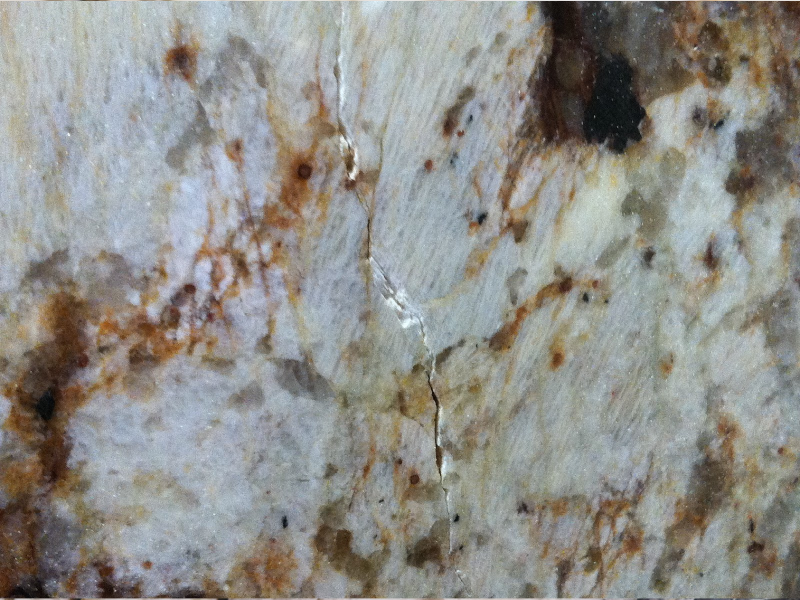 شق الجرانيت
فهم الفرق بين شقوق الجرانيت والكسور
غالبًا ما يتم الخلط بين شقوق وكسور الجرانيت، لكنها ميزات مميزة لها خصائص وآثار مختلفة على الحجر. إليك تحليل لمساعدتك على فهم الفروق بينها:
شقوق الجرانيت مقابل الكسور
- الكسور: هذه هي الانفصالات أو الانكسارات في الجرانيت التي يمكن أن تحدث بسبب عوامل مختلفة مثل الإجهاد أو الصدمة أو التعامل. يمكن أن تسببها قوى خارجية أو تغيرات في درجة الحرارة.
- الشروخ: الشروخ هي شقوق طبيعية جزء من التكوين الجيولوجي للجرانيت. تحدث بسبب الإجهادات الداخلية والتغيرات الهيكلية بينما يبرد الجرانيت ويتصلب في أعماق الأرض.
1. تكوين شقوق وكسور الجرانيت
- الكسور: يمكن أن تتطور الكسور أثناء عملية الاستخراج أو النقل أو تركيب الجرانيت. قد تتشكل أيضًا بسبب الإجهاد الهيكلي أو التلف بمرور الوقت.
- الشقوق: تتشكل الشقوق بشكل طبيعي أثناء تكوين الجرانيت. تنتج عن الحرارة والضغط الهائلين اللذين يتعرض لهما الجرانيت بينما لا يزال تحت الأرض.
2. المظهر:
- الكسور: يمكن أن تظهر كفواصل أو انفصالات مرئية في سطح الجرانيت. قد تختلف في الحجم، من كسور شعرية صغيرة إلى فواصل أكبر وأكثر وضوحًا.
- الشقوق: تظهر الشقوق عادةً كخطوط أو كسور يمكن أن تتبع الحبيبات الطبيعية للجرانيت. غالبًا ما تكون أقل وضوحًا من الكسور ولكن يمكن إبرازها اعتمادًا على تشطيب الحجر.
3. التأثير على الجرانيت بسبب الشقوق والكسور
- الكسور: يمكن أن تؤثر الكسور على السلامة الهيكلية للجرانيت، خاصة إذا كانت واسعة أو تحدث في مناطق حرجة. يمكن أن تضعف قوة الحجر ومتانته، مما يجعله أكثر عرضة للتلف الإضافي.
- الشقوق: الشقوق لا تؤثر عادةً على السلامة الهيكلية للجرانيت. إنها جزء طبيعي من الحجر وعادة ما تؤخذ في الاعتبار عند تقييم جودة الحجر. يمكن ملؤها أو ختمها أثناء المعالجة لتحسين المظهر، لكنها لا تؤثر عادةً على قوة الحجر العامة.
4. التعامل مع ومعالجة شقوق وكسور الجرانيت
- الكسور: إذا كانت هناك كسور، فقد تتطلب إصلاحًا أو تعزيزًا لضمان متانة الجرانيت. يمكن تطبيق معالجات خاصة أو مواد حشو لمعالجة الكسور ومنع المزيد من الضرر.
- الشقوق: يمكن ملء الشقوق بالراتنج أو الإيبوكسي خلال مرحلة المعالجة لإنشاء مظهر أكثر تجانسًا. يتم ذلك بشكل أساسي لأسباب جمالية بدلاً من المخاوف الهيكلية.
5. الشكل البصري:
- الكسور: يمكن أن تؤثر الكسور المرئية على الجاذبية البصرية للجرانيت، خاصة إذا كانت كبيرة أو غير منتظمة. قد تتطلب اهتمامًا للحفاظ على مظهر الحجر.
- الشقوق: يمكن أن تضيف الشقوق طابعًا للجرانيت، مما يعرض تاريخه الطبيعي وتكوينه. يقدر بعض الناس المظهر الفريد الذي توفره الشقوق، بينما قد يفضل آخرون سطحًا أكثر تجانسًا.
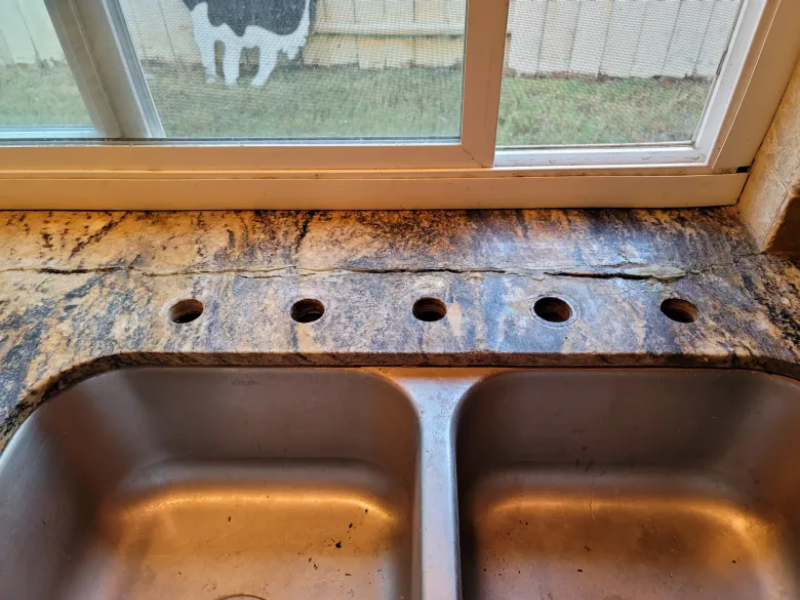 شقوق في سطح الجرانيت حول حوض المطبخ
كيفية اكتشاف وتقييم الحفر والشقوق والفواصل في الجرانيت
عند شراء الجرانيت، من المهم فحص الحفر والشقوق والفواصل بعناية لضمان اتخاذ قرار مستنير. إليك كيفية فحص كل من هذه الميزات:
1. فحص حفر الجرانيت
ما الذي يجب البحث عنه:
- الفحص البصري: انظر عن كثب إلى سطح الجرانيت للبحث عن أي حفر مرئية. استخدم مصباحًا يدويًا لتعزيز الرؤية، خاصة إذا كان الجرانيت مصقولًا مما قد يجعل الحفر أقل وضوحًا.
- الشعور: مرر يدك على السطح. قد تشعر بانخفاضات صغيرة أو بقع خشنة حيث توجد الحفر.
كيفية الفحص:
- فحص السطح: افحص المناطق المصقولة وغير المصقولة. تكون الحفر أكثر وضوحًا على الأسطح الملموسة ولكن يمكن أن تكون موجودة أيضًا على الجرانيت المصقول.
- الملء والختم: اسأل عما إذا كان الجرانيت قد تمت معالجته لملء الحفر. يقوم العديد من المصنعين بملء الحفر براتنج الإيبوكسي لإنشاء سطح أكثر سلاسة. استفسر عن هذه المعالجة إذا كانت الحفر مصدر قلق لك.
2. فحص شقوق الجرانيت
ما الذي يجب البحث عنه:
- الفحص البصري: افحص لوح أو بلاطة الجرانيت للبحث عن أي شقوق مرئية. قد تظهر كخطوط أو كسور في السطح.
- الحجم والعمق: قم بتقييم حجم وعمق الشقوق. قد تكون الشقوق الشعرية أقل إشكالية من الشقوق الأكبر والأكثر وضوحًا.
كيفية الفحص:
- اختبار الضوء: استخدم مصباحًا يدويًا لتسليط الضوء بزاوية مختلفة على الجرانيت. يمكن أن يساعد ذلك في الكشف عن الشقوق التي قد تكون مخفية بسبب الوهج أو الانعكاسات.
- اختبار النقر: انقر بلطف على السطح بأداة (مثل مطرقة صغيرة) لمعرفة ما إذا كانت هناك أي أصوات جوفاء، مما قد يشير إلى شقوق داخلية.
3. فحص الفواصل في الجرانيت
ما الذي يجب البحث عنه:
- الفحص البصري: ابحث عن خطوط أو كسور تمر عبر الجرانيت. قد تكون الشقوق أكثر وضوحًا على بعض التشطيبات أو الألوان.
- التناسق: غالبًا ما تكون الشقوق متناسقة في المظهر وتتبع الحبيبات الطبيعية للحجر.
كيفية الفحص:
- تأثير التشطيب: افحص الجرانيت تحت ظروف إضاءة مختلفة لفهم كيف تظهر الشقوق مع التشطيبات المختلفة (مثل المصقول مقابل المشحذ).
- ملء الراتنج: استفسر عما إذا كانت الشقوق قد تم ملؤها بالراتنج أثناء المعالجة. يمكن أن يعزز الملء مظهر الحجر ويمنع تراكم الحطام.
نصائح عامة لجميع الفحوصات:
- افحص عدة ألواح: إذا أمكن، تحقق من عدة ألواح أو بلاطات من نفس الدفعة لضمان التناسق في الجودة.
- اطرح الأسئلة: لا تتردد في سؤال المورد عن عمليات الفحص ومراقبة الجودة الخاصة بهم. يجب أن يكونوا قادرين على تقديم تفاصيل حول كيفية تعاملهم مع الحفر والشقوق والشروخ.
- فهم الضمان وسياسات الإرجاع: تعرف على الشروط المتعلقة بالعيوب أو المشاكل مع الجرانيت، بما في ذلك الحفر والشقوق والشروخ، حتى تتمكن من معالجة أي مخاوف بعد الشراء.
من خلال فحص هذه الميزات بعناية، يمكنك التأكد من أن الجرانيت الذي تختاره يلبي معاييرك ومناسب لمشروعك.
الخاتمة
في الختام، فهم الحفر والشقوق والشروخ في الجرانيت يساعدك على اتخاذ قرار ذكي لمشروعك. الحفر هي ثقوب صغيرة تضيف طابعًا ولكن يمكن ملؤها للحصول على مظهر أكثر سلاسة. الشقوق هي شروخ طبيعية تتكون أثناء تكوين الحجر وعادة لا تؤثر على القوة. أما الشروخ، فقد تنتج عن الإجهاد أو الضرر.
عند شراء الجرانيت، افحص هذه الميزات بعناية. ابحث عن الحفر وتحقق من حجمها، وافحص الشروخ للعمق، ولاحظ محاذاة الشقوق مع حبيبات الحجر. اسأل المورد عن أي معالجات أو حشوات.
الحفر والشقوق ليست مجرد عيوب؛ إنها علامات على مرور الحجر عبر الزمن. لمزيد من النصائح الخبراء ومجموعة واسعة من الجرانيت عالي الجودة، قم بزيارة Stone Galleria. فريقنا هنا لمساعدتك في اختيار الحجر المثالي لمشروعك. اتصل بنا اليوم لمعرفة المزيد!