
 Fact Checked
What separates an entrance that stops people in their tracks from one that just gets the job done? More often than not, it comes down to the steps.
Natural stone steps with a bullnose edge are one of the most specified choices in outdoor landscaping — and for good reason. That smooth, rounded edge isn’t just a design detail. It’s safer underfoot, more resistant to chipping and weathering, and it gives any space — from a private garden to a commercial landscape project — a finish that looks considered rather than convenient.
Yet most people arrive at the decision late, when the budget is tight and the options feel overwhelming. Indian sandstone bullnose steps or granite bullnose steps? Full bullnose or half bullnose? Grey sandstone, Raj Green, or black granite? What size, what finish, what application?
At Stone Galleria, these are the conversations we have daily. This guide answers all of them — so whether you’re a homeowner, builder, or landscape designer, you leave knowing exactly what to specify and why.
What Makes a Stone Step a Bullnose Step?
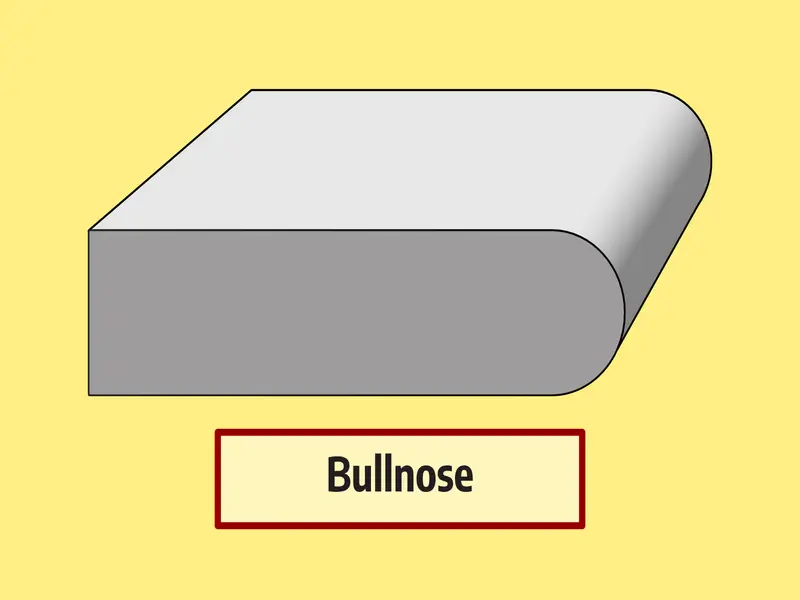
A bullnose step isn’t a material you select from a catalogue — it’s a natural stone step with a specific edge profile applied to it. Granite, Indian sandstone — that’s the material, the character, the decision. The bullnose is the design detail that determines how the exposed front edge of that stone is finished.
That distinction matters more than most people realise. The bullnose profile shapes the front nosing into a smooth, continuous rounded curve — eliminating the sharp square edge raw cut stone would otherwise leave. It makes the step safer underfoot, gives it a finished deliberate appearance, and improves long-term durability by distributing impact across a curve rather than concentrating it at a single vulnerable point.
The stone defines the space. The bullnose edge refines it.
ALSO READ | The Bullnose Edge Countertop: The Complete Guide for Homeowners, Builders & Designers
Full Bullnose vs Half Bullnose Steps — What’s the Difference?
Both share the same rounded curve — but they deliver different results and suit different contexts.
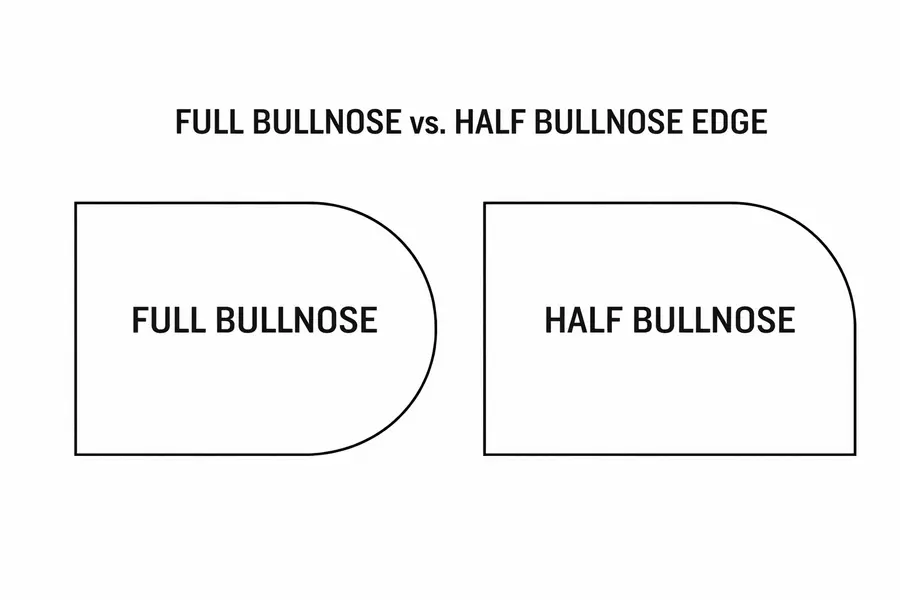
The full bullnose curves completely from the top surface to the underside in one continuous arc — soft, classic, and timeless. The right call for garden steps, residential entrances, and pool surrounds where a clean finish is the priority.
The half bullnose rounds the top edge but leaves the face of the step flat and vertical. That flat face exposes more of the stone’s natural depth and character — making it the stronger choice for thicker slabs and contemporary landscape projects where a more structured profile fits the design direction.
The profile is only half the decision. The other half — the one that shapes everything from colour to texture to long-term performance — is the stone itself.
ALSO READ | The Different Types of Granite Edge Profiles
Indian Sandstone Bullnose Steps
Indian sandstone has been used in outdoor steps for centuries — and it’s still the first material most landscape designers reach for. Not because it’s traditional, but because it genuinely performs.
The surface is naturally textured, which means grip comes built-in — no special finish required. That matters around pools, on garden steps, and at driveway entrances where wet stone underfoot is a real daily consideration.
Colour is where Indian sandstone earns its versatility. Raj Green sits beautifully in traditional and cottage-style gardens. Grey sandstone reads cleanly in contemporary landscapes. Buff tones work across almost everything in between.
Not sure which profile suits your project?
Talk to Our TeamWhether it's a garden flight, pool surround, or commercial landscape â we'll help you land on the right stone, profile, and finish before anything is fabricated.
One thing worth knowing upfront — sandstone is porous. Seal it properly and it weathers gracefully for decades. Skip that step and you’ll see staining and edge deterioration far sooner than you should. It’s a five-minute conversation worth having before installation begins.
Granite Bullnose Steps
Here’s something that comes up more than you’d think — someone spends serious money on a beautifully landscaped garden or a high-end pool surround, chooses a natural stone step that looks stunning on day one, and two years later the nosing is chipped, the surface is scratched, and the whole thing looks tired. Not because they made a bad decision. Because they chose the wrong stone for what the space actually demands.
That’s where granite earns its reputation.
Granite is one of the densest, hardest natural stones you can specify for steps. In high-traffic applications, that density is the difference between a step that holds its finish for decades and one that shows its age within a few years. Heavy foot traffic, pool chemicals, weather — granite handles all of it without complaint.
The bullnose profile on granite has a quality that’s hard to describe until you see it in person. Because granite polishes to such a high standard, that rounded curve catches light cleanly and consistently — giving the step a crispness and precision that softer stones simply can’t match. Black granite bullnose steps around a pool. Grey granite at a formal driveway entrance. Both stop people in their tracks for the right reasons.
It costs more than Indian sandstone — that’s just the reality. But when you’re not replacing or repairing steps five years down the line, the conversation about cost becomes much simpler.
Bullnose Step Colours & Finishes — Getting It Right Before You Commit
This is the decision most people underestimate — and the one that’s hardest to undo once the steps are in. Colour and finish aren’t just aesthetic choices. They affect how safe the steps are underfoot, how much maintenance they’ll need, and how well they age over years of real use.
Grey Sandstone
The most versatile colour in the Indian sandstone range. It sits comfortably in contemporary gardens and modern pool surrounds without competing with surrounding materials. Grey sandstone bullnose steps age gracefully — the natural variation in tone actually improves with weathering.
Raj Green
One of the most distinctive sandstone colours available. That earthy green-grey tone works particularly well in traditional gardens and naturalistic outdoor spaces. Raj Green bullnose steps look even better in person than they do in any photograph.
Buff & Brown Sandstone
The safe middle ground. Warm, neutral, and broadly compatible with brick, timber, and rendered finishes that dominate most residential exteriors.
Black Granite
The choice that makes a statement without trying too hard. Black granite bullnose steps are the most specified granite colour at Stone Galleria — particularly for pool surrounds and contemporary driveway entrances. Worth noting: a polished black granite surface shows water marks readily — a flamed or brushed finish avoids this.
Grey Granite
The workhorse of the granite range. Consistent, refined, and compatible with virtually every architectural style. Grey granite bullnose steps are the go-to for formal garden designs and large-scale commercial projects where colour consistency across multiple steps is non-negotiable.
Surface Finish — The Detail Most People Miss
A polished finish gives granite its signature reflective quality but is genuinely dangerous on wet outdoor steps. A flamed or brushed finish provides the slip resistance outdoor steps need without sacrificing the stone’s natural character. For Indian sandstone, the naturally textured surface handles this well — but a smooth sawn finish in a wet environment creates problems quickly.
Seen a finish you like? Let's match it to your space.
Get in TouchBring your brief, your site photos, or just a rough idea â our team works with homeowners, builders, and landscape designers daily to get the specification right first time.
Where Do Bullnose Stone Steps Work Best?
The bullnose profile works across virtually every outdoor application where levels change — but the stone choice, colour, and finish shift depending on where the steps actually live.
Garden & Patio Steps
Indian sandstone bullnose steps are the go-to here. The naturally textured surface handles wet conditions well and the bullnose nosing sheds water and resists chipping from daily garden use. Textured always wins outdoors.
Pool Surrounds
Bare wet feet, pool chemicals, and constant water exposure demand a rounded nosing, a dense stone, and a non-slip surface finish. Black granite and grey granite bullnose steps are the most specified here — flamed or brushed finish, never polished.
Driveway Entrances
A bullnose stone step at a driveway entrance sets the tone before anyone reaches the front door. Granite is the stronger choice — it handles vehicle overhang, heavy traffic, and full weather exposure without the maintenance demands sandstone requires.
Commercial & Landscape Projects
Volume, consistency, and durability are what matter at commercial scale. Granite bullnose steps deliver all three — colour consistency across large quantities, minimal maintenance, and a finish that holds up under heavy daily traffic.
Sizes, Dimensions & Safety — What to Know Before You Order
Getting dimensions wrong before fabrication begins is one of the most common and avoidable project delays. Standard tread depths run from 300mm to 450mm — 350mm is the sweet spot for most residential applications. Riser heights sit between 150mm and 200mm. Width is typically supplied in 900mm, 1200mm, and 1500mm lengths. Thickness ranges from 20mm to 50mm — 50mm for formal entrance and commercial steps where visual weight matters.
Thickness also affects the profile. A full bullnose on a 20mm step looks and feels different to the same profile on a 50mm step. Thicker slabs give the curve more presence. If the steps are a focal point of the design, err toward the thicker option.
On safety — the bullnose profile eliminates the sharp corner where most outdoor step trips happen. But surface finish is where the real safety decision lives. Flamed finish provides maximum slip resistance for pool surrounds and commercial steps. Brushed finish balances grip with a refined appearance for residential applications. Indian sandstone’s naturally riven surface provides inherent grip without any additional treatment. And a polished finish on any outdoor step — regardless of the stone — is a risk not worth taking.
Disadvantages of Bullnose Stone Steps — The Other Side of the Decision
So far this guide has covered the bullnose step from almost every angle — profile, stone, colours, finishes, applications, and dimensions. And across all of that, it’s painted a compelling picture. But every design decision comes with trade-offs, and the bullnose step is no exception.
A bullnose profile costs more and takes longer to fabricate than a square edge — factor that into budget and timeline from the start, not mid-project. Softer stones like Indian sandstone will show wear at the nosing in high-traffic applications where granite wouldn’t — specifying sandstone for a commercial entrance on aesthetics alone tends to disappoint within a few years. Colour consistency across large quantities of natural stone requires an experienced supplier — particularly with sandstone where batch variation can be pronounced. And the bullnose isn’t always the right profile — hard-edged contemporary and geometric designs often read better with a square or pencil-round edge.
Understanding these trade-offs before you commit is exactly what separates a decision you’re confident in from one you’re second-guessing six months after installation.
Conclusion: Are Bullnose Stone Steps Right for Your Project?
For most outdoor applications involving natural stone — yes. But the right answer isn’t just about the profile. It’s about the combination of decisions that sit behind it.
Indian sandstone bullnose steps for gardens, patios, and naturalistic outdoor spaces where warmth, texture, and character are the priority. Granite bullnose steps where density, durability, and a refined finish are non-negotiable — pool surrounds, driveway entrances, commercial and landscape projects that need to perform as well as they look.
Full bullnose where softness and safety lead the brief. Half bullnose where the stone’s depth and character deserve to be seen. Flamed or brushed where wet conditions are a reality. Never polished outdoors.
Get those decisions right and the bullnose step does exactly what the best details always do — it looks like it was always meant to be there.
If you’re still working through any part of that decision, the Stone Galleria team is the right next conversation. Stone Galleria supplies and fabricates bullnose stone steps across the globe.