Density of Granite: Detailed Exploration

Mohit Poddar
Author Team Stone Galleria
info Content written and verified by the Stone Galleria Team — combining hands-on stone industry expertise with research-backed insights.
Reviewed By Mohit Poddar Business Development Head — Stone Galleria India
info Expert-verified by Mohit Poddar — with hands-on experience in natural stone sourcing, processing & client consultation.
Published: March 09, 2025 — 17:55 IST Updated: February 24, 2026 — 20:01 IST Read Time: 4 min read 306 Views Fact Checked Fact Checked
Why this article is marked as fact-checked

Every Stone Galleria article/blog goes through a verification process before receiving a fact-checked label. Technical details — including colour variation, density, finishes, production behaviour, and quarry origin — are cross-checked using factory logs, slab inspections, supplier documentation, and real on-site experience. Articles are reviewed by domain experts and updated whenever new or corrected information becomes available.

Takeaways by Stone Galleria AI

Granite's density is a key factor influencing its performance, including structural integrity and design aesthetics. Understanding density aids in material selection, cost estimation, and ensuring stability in construction applications. Factors such as mineral composition, porosity, and geological processes affect granite density.

  • Density is calculated by dividing mass by volume, indicating how tightly particles are packed.
  • Higher-density granite offers better durability and is suitable for high-traffic areas.
  • Granite density impacts transportation costs and structural stability in construction.

Understanding granite density is essential for selecting materials that balance aesthetics, durability, and cost in construction projects.

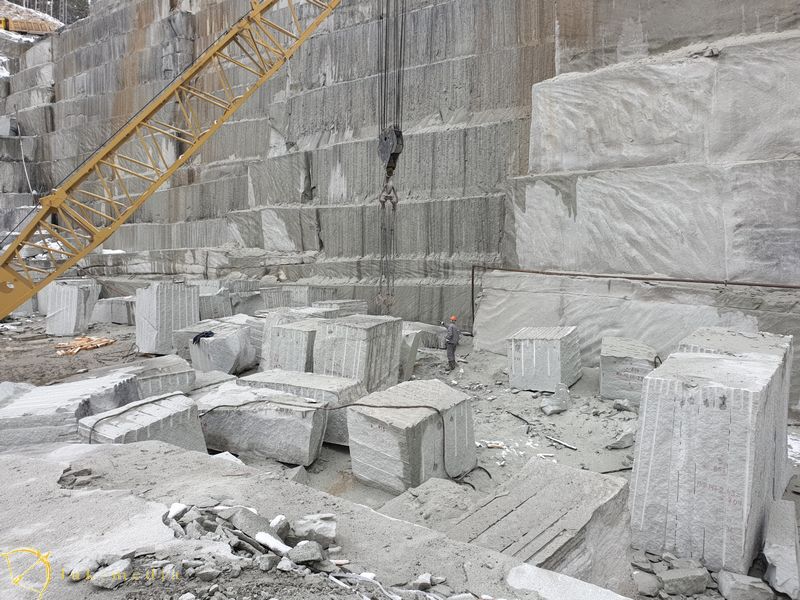
Granite is renowned for its beauty and durability, but did you know that its density plays a crucial role in its performance? In this exploration, we’ll uncover the importance of granite density. Join us as we reveal how this often-overlooked characteristic influences everything from structural integrity to design aesthetics, shedding light on the hidden dimension of this magnificent natural stone

Density-of-Granite

Image Source: AllMath

What is Density?

Let us first of all understand, what is density.

Density is a fundamental physical property that describes how much mass is contained within a certain volume of a substance. Essentially, it quantifies how tightly the particles of a material are packed together.

Mathematically, density (ρ) is calculated by dividing the mass (m) of an object or substance by its volume (V):

Density = m/VVolume Length × Width × Thickness, with all measurements standardized to the same unit, whether it be inches or centimeters

For accurate results, repeat the process with multiple samples from different parts of the granite source and take the average density.

For example, imagine a cube of granite. If you know the mass of the granite cube and measure its volume, you can calculate its density using this formula.

READ | Granite vs. Other Materials: A Comprehensive Comparison of Hardness, Porosity, Stain Resistance, and Wear & Tear

Why is It Important To Know The Density Of Granite?

Material Selection

When selecting material for your project, whether it’s for kitchen countertops, flooring, or architectural facades, understanding the density of the material is paramount. Density serves as a reliable indicator of the granite’s strength, durability, and overall performance. Higher-density material offers superior resistance to wear and tear, making it ideal for high-traffic areas and applications where durability is key. On the other hand, lower-density materials may be more suitable for decorative purposes or projects with less demanding requirements. By considering the density of granite during the selection process, you can ensure that your chosen material not only meets your aesthetic preferences but also delivers the durability and longevity you need for your project to stand the test of time.

READ | The Reason for Material Selection: Engineered Stone Vs Natural Stone

Estimating Costs

The density of granite directly impacts its weight, which in turn has implications for transportation costs. Suppliers must accurately assess shipping expenses by considering the density of the granite. Likewise, consumers benefit from understanding granite weight based on its density to estimate shipping costs effectively and to gauge the weight capacity their structures can handle.

Stability and Structural Integrity

The density of granite influences its structural integrity and stability. High-density granite is less likely to warp, crack, or deform under stress, making it suitable for load-bearing applications such as supporting structural columns or building facades. Understanding the density helps architects and engineers select materials that can withstand the forces acting upon them and ensure the long-term stability of structures.

Granite hardness and density are inherent characteristics, but they are governed by different factors. Hardness reflects the resilience of the minerals within granite, particularly determined by the presence of tough minerals like quartz, feldspar, etc. On the other hand, density is a measure of how tightly packed the molecules are within the granite structure. While hardness signifies resistance to scratching and abrasion, density indicates the compactness of the material. Thus, while both contribute to granite’s overall composition, they represent different aspects of its physical properties.

READ | What Is The Hardness Of Granite? Understanding Granite Hardness on the Mohs Scale

Cost Considerations

While higher-density granite typically offers superior strength and durability, it also comes with a higher price tag due to its quality and performance characteristics. Consumers must consider the trade-offs between upfront costs and long-term value when selecting granite based on density. Lower-density materials may be more affordable initially but could require more frequent maintenance or replacement over time, potentially offsetting any initial cost savings.

Density plays a role in fabrication, where higher-density granite presents a challenge but promises durability. Moreover, it defines the aesthetic, offering a solid, uniform texture with higher density, instilling confidence in its appearance and performance.

READ | Why Natural Stone Is Cheaper In The Long Run Compared To Engineered Options

What are the Factors Affecting Granite Density?

A few factors can influence the density of granite, they are

Mineral Composition

The types and proportions of minerals present in the granite can affect its density. Minerals with higher densities, such as quartz and feldspar, contribute to a higher overall density of the granite.

Porosity

The amount of porosity or open space within the granite can impact its density. Higher porosity typically results in lower density, as there is less solid material present in a given volume.

ALSO READ | Is Granite Porous? or Non-porous or How Porous Is it?

Geological Processes

The geological processes involved in the formation of granite, such as pressure and temperature changes over time, can influence its density. Since granite forms under high-pressure natural conditions, it typically boasts a higher density compared to manufactured materials or those with unnatural density variations.


Frequently Asked Questions

The density of granite ranges from 2.65 to 2.75 grammes per cubic centimetre (165 to 172 pounds per cubic foot) on average.


1. Gather Materials: Prepare a scale (measuring in grams), a ruler or measuring tape, and a calculator. 2. Measure Dimensions: Determine the length, width, and thickness of the granite slab or tile, all in the same unit (inches or centimetres). 3. Calculate Volume: Multiply the length, width, and thickness measurements to find the volume in cubic inches or cubic centimetres. 4. Weigh the Granite: Utilize the scale to measure the weight of the granite slab or tile in grams. 5. Compute Density: Divide the weight by the volume to ascertain the density in grams per cubic inch or cubic centimetre. Example: A granite slab weighing 4000 grams with dimensions 12″ x 6″ x 0.75″ has a density of approximately 74.07 grams per cubic inch. Ensure consistent units for precise results.


Density affects granite’s cost as denser varieties are often more durable and desirable for high-traffic areas, leading to higher prices. Additionally, higher-density granite is heavier, increasing quarrying and transportation expenses, which are passed on to consumers. However, other factors like rarity and aesthetics also influence the final cost.


Granite density plays a crucial role in architectural design. Higher-density granite is stronger and more durable, making it perfect for structural elements like columns and facades. It allows for creative designs while ensuring longevity. Lower-density materials are better suited for decorative purposes or where weight is a concern. Understanding granite density helps architects choose the right material for their projects, balancing strength, aesthetics, and practicality.


Consumers can use knowledge of granite density to compare it with other materials of lower density when making informed decisions. Understanding the density of granite allows consumers to assess its strength and durability compared to alternatives. For example, when choosing between granite and a lower-density material like marble or quartz, consumers can consider factors such as scratch resistance, heat resistance, and overall durability. Additionally, knowledge of density helps consumers evaluate the cost-effectiveness of different materials, as higher-density granite may require less frequent replacements and maintenance over time. By comparing granite density with other materials, consumers can weigh the trade-offs between durability, aesthetics, and cost to select the most suitable option for their needs.


While there’s generally a positive correlation between density and strength in materials like granite, it’s important to approach this relationship with nuance. Higher-density granite generally tends to be stronger, but other factors like mineral composition and porosity also play significant roles. Therefore, while density can provide valuable insights into a material’s strength, it’s essential to consider a range of factors for a comprehensive understanding.


Based on the average density of granite. For 2 centimetres (cm) Thickness: 5.90 kilograms per square foot For 3 centimetres (cm) Thickness: 8.16 to 9.07 kilograms per square foot For 5 centimetres (cm) Thickness: 13.61 kilograms per square foot


Reviewer: Mohit Poddar

About the Reviewer — Mohit Poddar

Business Development Head · Stone Galleria India

Have Insights to Contribute?

Are you an architect, interior designer, builder, or natural stone professional? If you have insights, corrections, or real-world experience that could enhance this article, we’d love to hear from you.

We occasionally feature expert perspectives and review submissions carefully, publishing only those that align with our focus on natural stone and design.

Write to Us
Trust Icon Why You Can Trust Our Stone Information and Industry Insights
At Stone Galleria, we don’t just write about natural stone — we work with it every day. We source raw blocks from trusted quarry operators, process them in-house, and work closely with contractors, dealers, fabricators, and buyers — both in India and internationally.

As manufacturers, we see what really happens — from selecting raw blocks to finishing slabs — including the challenges, trade-offs, and common questions that arise during actual projects. What we share here is based on real-time production, industry conversations, and our day-to-day factory operations — not just online research.

That’s why the information you’ll find here is practical, experience-based, and shaped by the realities of working with stone — every single day.

Estimate Granite Weight by Density and Size

Want to calculate the weight of granite based on its density? Use our free granite weight calculator to estimate the load for your slabs, countertops, or exports.

Use Granite Weight Calculator

Need Help Choosing the Right Granite Based on Density?

If you're planning a project that needs strong, high-density granite, we can help you choose the right material and format based on weight, strength, and use-case.

Ask a Granite Expert

Latest Blogs from Stone Galleria

Most Popular Blogs

Cookie Preferences

Strictly necessary (always active)

Analytics cookies

Marketing cookies