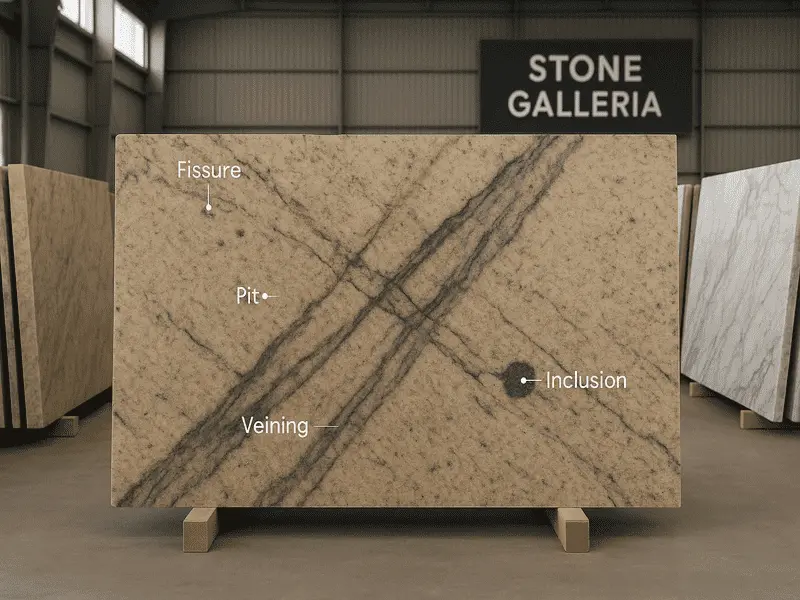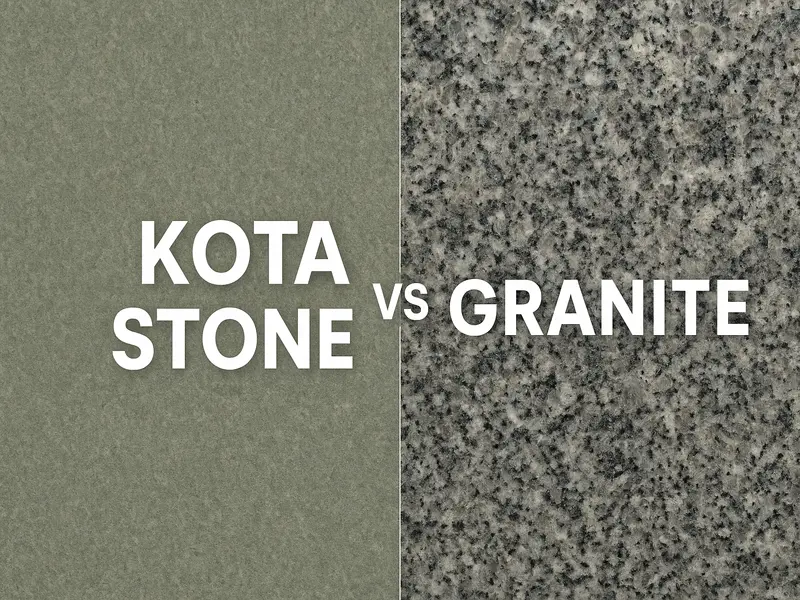

 Fact Checked
Looking for a stone that’s as tough as granite but as stunning as marble? Meet quartzite—the unsung hero of the natural stone world.
In the world of stones, the variety can be overwhelming. Natural stones like marble, granite, quartzite, sandstone, slate, basalt, limestone, and travertine each have their unique features and applications. Then, there are engineered stones such as quartz, terrazzo, porcelain tiles, and engineered marble. With so many options, it’s natural to wonder which stone is best for your needs.
Within these categories, there are hundreds, if not thousands, of individual products, each with its own texture, finish, color, and suitability for different uses. It’s natural to want to learn more about a new type of stone, especially when you come across something unfamiliar.
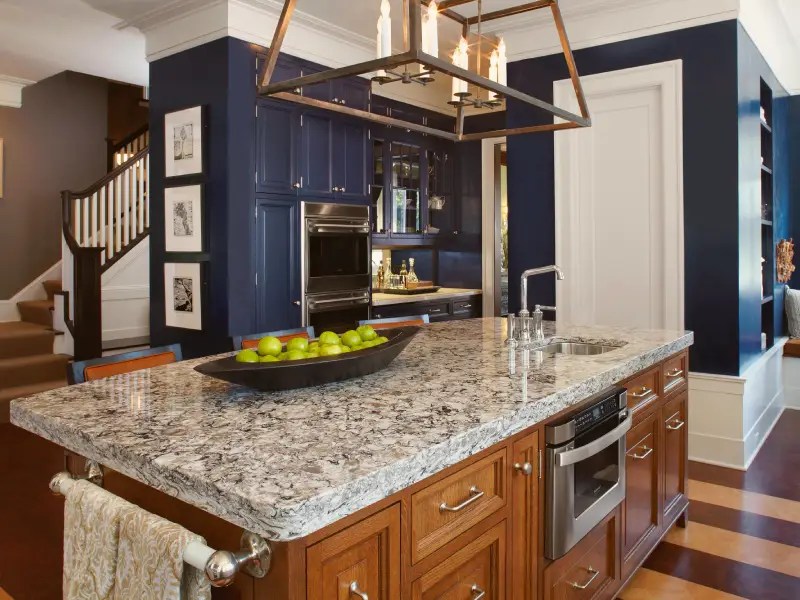
One such stone that’s increasing popularity in recent times is quartzite. Although it has been around for a while, its rise in demand can be largely attributed to advancements in technology, which have made processing and refining quartzite much easier and more efficient.
What is Quartzite?
Quartzite is a dense and durable metamorphic rock primarily made up of the mineral quartz. It starts out as sandstone, which is composed of sand grains often found on beaches, in deserts, or along riverbeds. Over time, these sand grains undergo a process called recrystallization. During this process, silica acts as a natural glue, binding the grains together as the sandstone becomes buried under layers of other rocks.
In Short, Quartzite is like the upgraded version of sandstone after going through nature’s high-pressure kiln
How Quartzite is Formed
Quartzite begins as sandstone, a rock composed of sand grains commonly found on beaches, in deserts, or along riverbeds. Over time, layers of sediment build up over the sandstone, subjecting it to intense heat and pressure beneath the Earth’s surface. This process, known as metamorphism, causes the sand grains to recrystallize. Silica acts as a natural cement, binding the grains together until the sandstone transforms into a much harder rock—quartzite.
Colours and Variations
Quartzite is typically light-coloured (white or light grey) because its primary component, quartz sand which is naturally light in colour. However, presence of mineral impurities carried by groundwater during the rock’s formation can create a range of colours. For example:
- Iron Oxides (Hematite): Add reddish or pinkish hues.
- Chlorite & Serpentine: Introduce green shades.
- Magnetite or Other Minerals: Can create blue or darker tones.
Despite these colour variations, quartzite is fundamentally composed of one thing: quartz. This is significant because quartz has unique properties that make it easy to identify compared to other minerals. (Note: This refers to the natural mineral quartz, not the engineered composite material commonly used in countertops that also goes by the name “quartz.”)
Quartzite Composition and Appearance
Quartzite is primarily composed of silicon dioxide (SiO₂) – 90-99%, as it’s formed from sandstone rich in quartz grains. It is highly resistant to chemical weathering due to its dense crystalline structure. Quartzite does not react to acids like vinegar or lemon juice, making it more durable than stones like marble. Its chemical stability contributes to its toughness and resistance to stains.
- Durability: Quartzite is one of the hardest natural stones, often surpassing granite in strength. It ranks around 7 on the Mohs hardness scale.
- Appearance: It is known for its striking patterns and colors, ranging from soft whites and grays to vibrant hues, depending on the presence of minerals.
- Texture: Quartzite has a crystalline texture and a slightly grainy feel.
- Heat Resistance: It withstands high temperatures, making it ideal for kitchens countertop
- UV Resistant: Quartzite won’t fade in sunlight, making it perfect for outdoor or sunny spaces.
Physical & Mechanical Properties of Quartzite
Density: 2.6 – 2.8 g/cm³
(ASTM C97)Porosity: <1% (Low, making it highly water-resistant)
(ASTM C97)Water Absorption: 0.2 – 1.0% (Varies by sample)
(ASTM C97)Mohs Hardness: 7+ (Higher than granite)
(Mohs Scale)Compressive Strength: 150-300 MPa (High strength)
(ASTM C170)Flexural Strength: 10-20 MPa
(ASTM C880)Abrasion Resistance: High (Good for flooring & countertops)
(ASTM C241)
Note: Low porosity and high hardness make quartzite highly resistant to weathering, stains, and scratches.
Hardness of Quartzite on Mohs Scale
Quartzite falls between 7 and 8 on the Mohs Hardness Scale (where 1 is the softest and 10 is the hardest), making it tougher than granite, which ranges from 6 to 7. Quartzite is one of the hardest countertop materials, ranking higher than quartz on the Mohs scale. While quartz (engineered stone) typically has a hardness of 7, quartzite can go up to 8, making it more resistant to scratches and wear.
For comparison:
- Marble – 3 to 5 (softer, prone to scratching)
- Granite – 6 to 7 (hard, but slightly less than quartzite)
- Quartzite – 7 to 8 (extremely hard and durable)
This makes quartzite an excellent choice for high-traffic areas, countertops, and outdoor applications where durability is a priority.
What Is the Difference Between Quartzite and Other Stones?
- Quartzite vs. Marble: Though similar in appearance, unlike marble, quartzite is much harder and less prone to etching or scratching.
- Quartzite vs. Granite: While both are durable, quartzite often has a more delicate, marble-like appearance, blending beauty and strength.
- Quartzite vs. Quartz: Quartz is man-made from resin and quartz, while quartzite is a natural stone. Quartzite is harder and scratch-resistant, unlike quartz.
Quartzite has appeal of marble and strength that exceeds granite. it’s an ideal combination of two of the most popular natural stone, offering both aesthetics and durability.
ALSO READ | Comparative Analysis of Granite vs. Quartzite vs. Quartz: Why and What to Choose
How Heat-Resistant, Scratch-Resistant, and Porous Is Quartzite?
Before choosing quartzite for your project, it’s important to understand how it performs under everyday conditions. Let’s break down its key physical properties — heat resistance, scratch durability, and porosity — so you know exactly what to expect.
Heat Resistance
Quartzite is highly heat-resistant, making it one of the best choices for kitchen countertops, fireplaces, and outdoor kitchens. Unlike engineered surfaces, quartzite can withstand high temperatures without scorching or discoloration. So, how much heat can quartzite take? While true quartzite can handle direct contact with hot pans, it’s always best to use trivets or hot pads to prevent potential damage to resins that may be present in some slabs.
If you’re wondering, “Can you put heat on quartzite countertops?”—the answer is yes. However, to maintain its longevity, it’s wise to take simple precautions. Heat on quartzite countertops won’t cause etching or warping, but consistent exposure to extreme temperatures could impact any sealants or resins used in processing. When selecting a slab, it’s a good idea to ask if it has been treated with resins that might react to heat.
Does Quartzite Scratch & Etch?
Quartzite is highly scratch-resistant, thanks to its tough, dense composition. It’s harder than granite and most other natural stones, making it less prone to scratches from daily activities like cutting.
Quartzite is highly resistant to etching, unlike marble. The mineral structure of quartzite makes it impervious to damage from acidic substances, such as lemon juice or vinegar, which are common causes of etching in softer stones.
Quartzite Moisture Retention
Quartzite is generally resistant to stains but its porosity varies based on its type and treatment. While some quartzite varieties, are tightly compacted and absorb little liquid, others, are more porous and can benefit from sealing to reduce absorption.
However, it’s important to note that resin treatments, often applied for many purposes, can make quartzite less permeable. While this treatment may enhance the stone’s appearance, it can trap moisture underneath the surface, potentially causing discoloration and saturation marks over time. In cases where the stone is improperly dried during fabrication or installation, the risk of moisture retention increases, leading to dampness and stains that are difficult to remove.
For the best long-term performance, regular sealing is recommended, especially for more porous quartzite varieties, to prevent moisture from being absorbed
ALSO READ | Understanding the Process of Slab Resining of Natural Stones – Marble, Quartzite & Granite
Is Quartzite Translucent?
As mentioned earlier, the primary mineral in quartzite is quartz, which is naturally translucent. During the formation of quartzite, the quartz grains recrystallize and fuse tightly together. When there is a lack of other minerals or only the presence of trace amounts like hematite, the result is a colour-less, pure white, or smoky grey interlocking grain structure that allows light to pass through, giving the stone its translucent appearance. The degree of translucency depends on the purity of the quartzite—purer quartzite with fewer impurities tends to be more translucent. Cristallo quartzite is a prime example of a completely translucent stone.
ALSO READ | Granite vs. Quartzite: Comparing Two Titans of the Natural Stone World
Applications of Quartzite
- Countertops: Opaque quartzite is ideal for durable kitchen and bathroom countertops. Translucent quartzite, when backlit, adds a glowing, luxurious effect.
- Flooring & Wall Cladding: Opaque quartzite is perfect for high-traffic areas and exterior walls. Translucent quartzite is great for decorative, backlit wall panels.
- Fireplaces & Sculptures: Opaque quartzite is used for traditional fireplace surrounds, while translucent quartzite creates glowing, modern art pieces.
- Outdoor Landscaping & Lighting: Opaque quartzite is excellent for outdoor pathways, while translucent quartzite shines in custom lighting fixtures. Both offer versatility, with opaque quartzite focusing on durability and translucent quartzite providing stunning light effects.
ALSO READ | Quartzite Heat Resistance: A Comprehensive Guide
Where is Quartzite Found In India?
Quartzite in India is predominantly found in Rajasthan, which is home to vast deposits due to its ancient geological formations. The Aravalli Range, one of the oldest mountain ranges in the world, plays a significant role in the presence of quartzite in this region. The sandstone layers in Rajasthan were subjected to intense heat and pressure over millions of years, transforming them into the dense, durable quartzite seen today. Other regions in India, such as parts of Madhya Pradesh and Karnataka, also have quartzite deposits, but Rajasthan remains the largest and most significant source.
What Is The Average Price Of Quartzite?
The cost of Indian quartzite typically ranges from ₹500 to ₹3,000 per square foot, depending on factors like color, pattern, thickness, and quality. This price variation is driven by the rarity of the stone, veining quality, origin, and availability.
For factory-direct pricing and a wide range of quartzite slab options, reach out to us. As an aggregator, we simplify the process of finding the right quartzite, saving you the hassle of visiting multiple factories or gathering quotes and images from different sources. Let us help you find the perfect quartzite quickly and efficiently.
Quartzite Slab Size & Dimensions
Generally, quartzite slabs are available in larger formats, commonly known as gangsaw size slabs. However, processing them in vertical size (cutter size) is less common due to the high density and hardness of quartzite.
Only a limited number of factories have the advanced machinery required to cut quartzite into smaller sizes. When smaller dimensions are specifically needed, they must be processed using specialized equipment, which increases the cost per square foot.
The average quartzite slab size typically ranges between- 110 to 130 inches (280 to 330 cm) in length &
- 60 to 80 inches (150 to 200 cm) in width or height
- Standard Quartzite Slab Size: ~120” x 70” (305 cm x 180 cm)
- Jumbo Quartzite Slab Size: Can exceed 130” x 80” (330 cm x 200 cm)
Thickness options usually include 2 cm (¾ inch) and 3 cm (1 ¼ inch). Some custom-cut slabs may have different dimensions based on specific project needs.