
 Fact Checked
Granite isn’t just about color and finish—it’s also about thickness. Whether you're sourcing granite for flooring, countertops, wall cladding, or staircases, choosing the right thickness is as important as choosing the right colour or polish. This comprehensive guide breaks down everything you need to know about granite slab & tile thickness across all major applications, so you can make an informed decision that balances aesthetics and structural needs.
Why Granite Thickness Matters?
Granite’s thickness affects its performance, appearance, handling, and even cost. Key reasons thickness matters include:
- Strength & Load Bearing: Thicker granite slabs can support more weight and withstand greater impact without cracking. For example, a 3 cm slab is generally more durable and less prone to breaks than a 1 cm or 2 cm slab. Thinner granite (like 1 cm) must be handled carefully and often reinforced because of its fragility.
- Aesthetic Appeal: The thickness of the stone influences its visual prominence. A thicker edge (e.g. a 3 cm countertop) creates a bold, high-end look, whereas a thinner slab appears sleek and modern. Many homeowners prefer the substantial appearance of a thicker granite profile for a luxury feel.
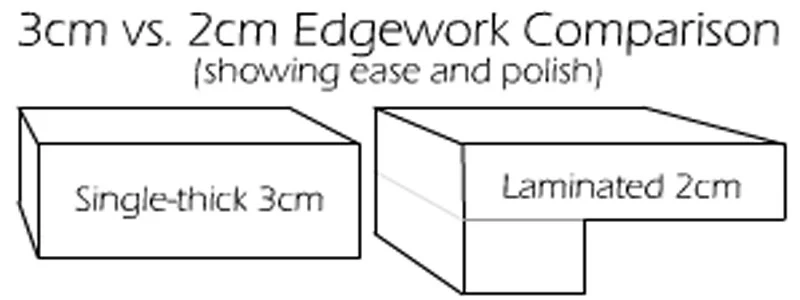
- Installation & Support: Thinner slabs may require additional support during installation. A 2 cm (~0.75″) granite countertop typically needs a plywood substrate or other reinforcement underneath to prevent sagging or breakage, while a 3 cm (~1.25″) slab is usually strong enough to support itself without extra backing. Extra labor (like laminating edges to hide the substrate) can make installing thinner granite more complex.
- Cost & Transportation: Thickness also impacts cost and logistics. Thicker slabs use more raw material and are heavier, which increases their price and the expense of moving and installing them. For example, an 18 mm granite slab weighs roughly 50 kg per square meter, whereas a 30 mm slab can weigh ~85 kg/m² – this adds to shipping costs and requires sturdier handling and support.
In short, choosing the appropriate thickness for your granite (e.g. a slim 10–16 mm panel for wall cladding vs. a sturdy 30 mm slab for a kitchen island) is essential to achieve both the structural strength and the visual effect you need. The right thickness ensures your granite installation performs well for its intended use while looking great for years to come.
Standard Granite Slab Thickness – 10mm, 16mm, 18mm, 2cm, 3cm, and More
Granite slabs come in a range of standard thicknesses. The most common thicknesses for most projects are 2 cm and 3 cm, which have long been industry standards. However, other sizes are available for various purposes. The table below summarizes typical granite thickness options and their usual applications:
| Thickness | Approx. Measurement | Typical Use Cases |
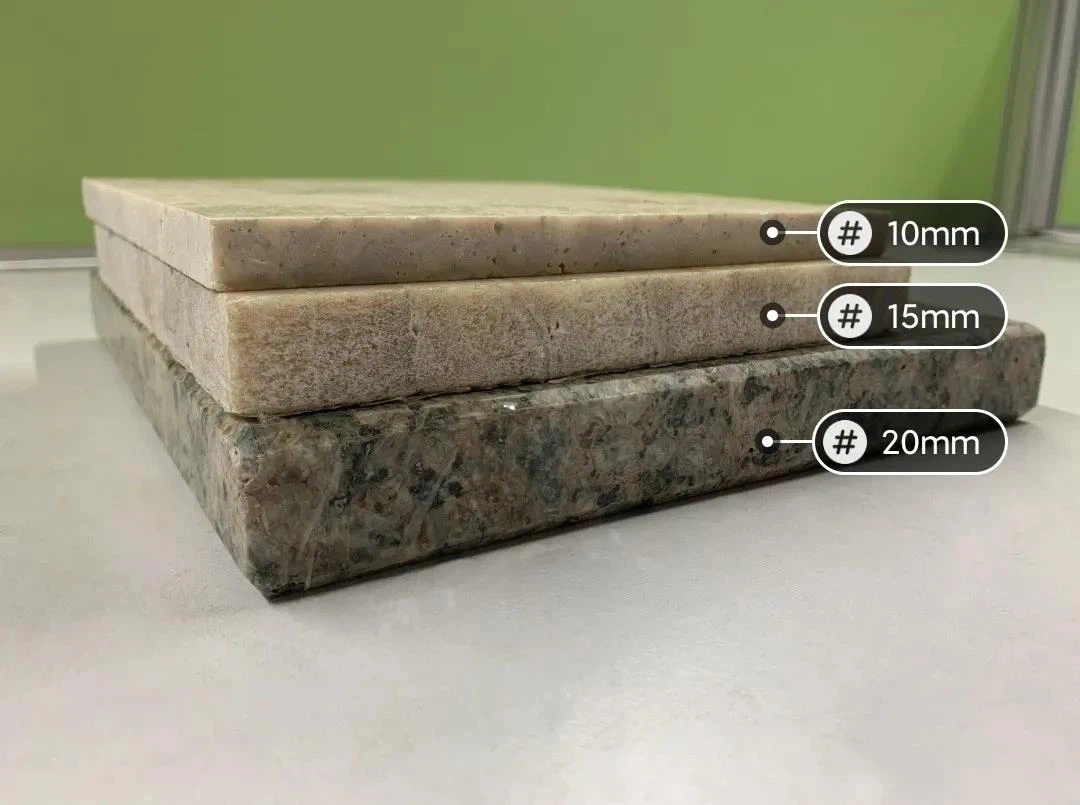
| 10–12 mm | ~0.4–0.5 inch | Very thin slabs for wall cladding, interior decorative panels, other vertical applications where weight must be minimized . |
| 15–16 mm | ~0.6 inch | Tiles and lightweight flooring; low-traffic floor areas; some interior walls. (Offers cost savings but not used for heavy loads) |
| 18 mm | ~0.7 inch | Standard thickness for many granite cutter slabs – used in flooring, wall panels, facades, and some countertops. Provides a balance of strength and manageability. |
| 2 cm (20 mm) | ~0.78 inch | Common slab thickness for countertops, stair treads, window sills, etc. (Widely used; 2 cm was the old industry norm for counters, but often needs support underneath). |
| 3 cm (30 mm) | ~1.18 inch | Thicker slabs for heavy-use countertops, kitchen islands, high-traffic stairs, exterior pavers. This has become the modern standard for many kitchen countertops due to its strength. |
| 4 cm (40 mm) & up | 1.5+ inch | Extra-thick custom slabs for premium installations. Often created by laminating two slabs (e.g. a laminated edge to appear 6 cm thick or cut to order. Used for dramatic countertop edges, monuments, and other specialized projects. |
Note: Many suppliers can provide custom thicknesses beyond the standard ranges. For instance, 5 cm (2 inches) is an option used for a very bold countertop or bar top (though uncommon due to cost). Some luxury projects even use slabs 6 cm (~2.36″) thick or more (often by laminating two 3 cm pieces) to achieve a “Mastodon” look. Always consider that going beyond ~3 cm will significantly increase weight and expense, so ensure your project really requires it.
Thickness by Application
Different applications call for different granite thicknesses. Below, we break down recommended thickness ranges for various uses of granite:
Countertops Thickness (Kitchen & Outdoor)
- Standard or Typical Thickness: For most kitchen countertops (indoor or outdoor kitchens), the standard choices are 2 cm or 3 cm granite slabs. Of these, 3 cm (~1.25″) is now more popular for its superior durability and ability to span cabinets without support. A 2 cm (~0.75″) countertop can certainly be used, but it will likely require a plywood, concrete backing or metal bracing to ensure it doesn’t flex or crack. Both thicknesses are widely available in the market.
- Premium Look Options: If you want an especially thick, luxurious-looking counter, you have a couple of options. One is to laminate the edge of a 2 cm slab to give the illusion of a thicker edge – for example, creating a doubled 6 cm apron front by bonding two slabs or adding a thick edge strip. Another option is ordering a solid 4 cm slab if available; a 4 cm (1.5″) thick countertop has a very robust appearance and is sometimes used on high-end kitchen islands or bar tops. These extra-thick countertops make a bold design statement, but keep in mind they will be heavier and costlier (both in material and installation).
ALSO READ | Looking for information on What Is the Ideal Granite Thickness for Countertops?
Granite Thickness for Flooring
- Residential Flooring: Granite floor tiles in homes are often around 16 mm to 18 mm thick. Tiles in this range (roughly 5/8″ to 3/4″ thick) are sturdy enough for normal foot traffic while keeping material costs manageable. Thinner granite tiles (10–12 mm) exist and can be used for floors in low-traffic areas, but 16–18 mm provides better durability and resistance to cracking.
- Commercial Flooring: For high-traffic public areas or commercial buildings, thicker granite tiles or slabs are recommended – typically 18 mm up to 20 mm (2 cm) thick. A thicker tile can better withstand constant foot traffic, heavy objects, and wear over time In fact, some experts suggest using 20 mm or even 30 mm for large commercial flooring to ensure longevity. (Note that using 2–3 cm slabs as floor pavers can significantly increase floor height and weight, so the subfloor and design must accommodate that.)
Granite Thickness for Staircases & Risers
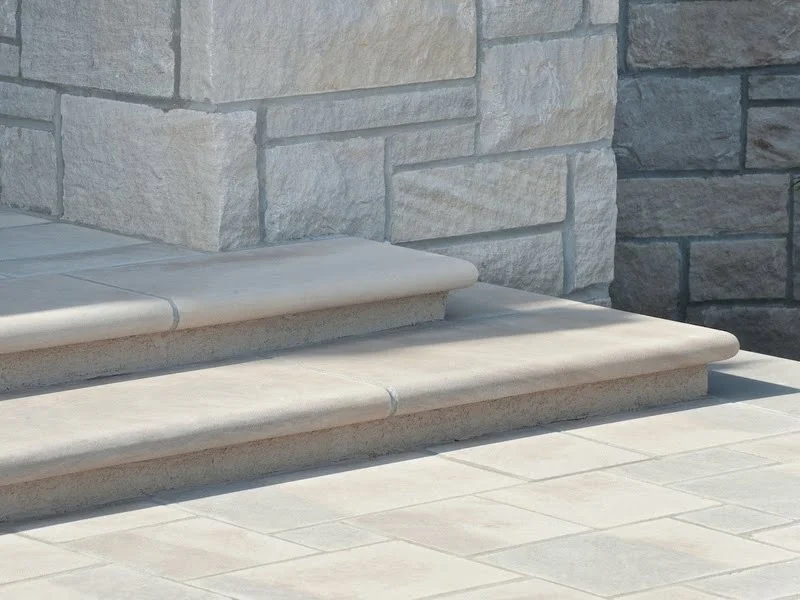
- Stair Treads: For granite staircases, the treads (the horizontal steps you walk on) are usually 2 cm or 3 cm thick. Which to choose depends on the expected foot traffic and the support structure. A 3 cm-thick granite tread offers extra strength and is preferred for heavy-use stairs (e.g. public building staircases or exterior steps). For residential stairs with good underlying support, 2 cm may suffice, but it’s on the thinner side – 3 cm treads will feel more solid underfoot and are less likely to crack under heavy weight.
- Risers: The risers (vertical portions of steps) do not bear direct weight, so these can be thinner. It’s common to use granite tiles of about 16–18 mm for risers, or even thinner in some cases, since they are mostly for aesthetic covering. Using a thinner piece for the riser can reduce weight and cost. Many stair designs use the same thickness for risers as the flooring or wall cladding to maintain visual consistency (e.g. if your floor is 18 mm granite tiles, the stair riser can be the same). Just ensure the riser material is flush and well-supported by the tread above.
Wall Cladding & Façades
- Interior Wall Cladding: When granite is used as wall cladding (interior accent walls, fireplace surrounds, etc.), thin slabs are ideal. Standard granite cladding panels range from about 10 mm up to 18 mm thick. Thin granite (10–12 mm, or about 3/8″ to 1/2″) keeps the weight low, which is important when attaching stone to walls. These slim panels are usually backed by mortar or adhesive. For interior use, thickness often just impacts the aesthetic (a thinner panel looks like tile, a thicker one gives a more pronounced stone edge reveal).
- Exterior Facades (Ventilated or Anchored): Granite facades on building exteriors also use relatively thin panels, but they need to be a bit thicker for strength. Approximately 16 mm (5/8″) is a common thickness for exterior granite cladding that is mechanically anchored to a building frame. Panels on a ventilated façade system are often in the 14–18 mm range, depending on the anchor design, to ensure the stone can handle wind loads and the undercut anchors have enough material to grip. In practice, many exterior cladding systems use 20 mm (~3/4″) granite panels for robustness. Always follow the engineering requirements of the cladding system – they will specify a minimum thickness (often around 16 mm or more) for safety.
Granite Thickness for Window frames, Window Sills, Hearths, and Upstands
- Common Thickness: Granite window sills, fireplace hearth slabs, countertop backsplashes, and upstand pieces are typically cut from 2 cm or 3 cm stock. Using the same thickness as your countertop (if applicable) often gives a cohesive look – for instance, a kitchen window sill might be done in the same 3 cm granite as the counter, or a fireplace hearth in 3 cm to endure heat and provide a substantial border.
- Custom Thicker Options: For a more massive luxury appearance, some homeowners opt for 4 cm thick window sills or hearths. These are less common and usually need to be special ordered or fabricated by laminating pieces. A 4 cm granite sill/hearth will be very heavy, but it can add a high-end touch of craftsmanship. In general, 2–3 cm is sufficient for most of these smaller applications, and thicker pieces are primarily for stylistic preference (they don’t necessarily perform much differently aside from added weight).
Outdoor Use (Cladding & Benches)
- Exterior Applications: For any granite used outdoors – such as patio pavers, outdoor kitchen countertops, benches, or exterior wall cladding – it’s wise to err on the thicker side. As a minimum, 3 cm (1.18″) thickness is suggested for freestanding or exposed outdoor elements. Why? Thicker granite handles weather extremes and accidental impacts better. For example, a solid granite bench or table will often use a 3″ (approximately 7–8 cm) thick seat slab for a very sturdy construction. You may not need something that thick for all cases, but using at least a true 3 cm slab for outdoor counters, steps or benches provides a margin of safety against cracking due to temperature fluctuations, heavy loads (like people sitting on a bench), or thermal expansion.
- Note on Exterior Cladding: Thin panels (1–2 cm) can be used on exteriors if they are part of a system (like stone veneer or anchored cladding) that supports them. However, if granite is used as standalone cladding or where it could suffer impact (say, the base of a building prone to kicks or bumps), thicker panels will be more resilient. In landscaping uses (steps, caps, benches), 3–5 cm is common depending on the design. Always consider the local climate and usage — freeze-thaw cycles and direct weather exposure make thicker stone desirable outdoors to avoid breakage.
Granite Thickness Conversion Chart (mm, cm, inches)
Granite slab thickness is often measured in millimeters (mm) at the factory, but in some countries it’s described in centimeters or inches. Below is a quick conversion reference for common thicknesses:
| Thickness (mm) | Thickness (cm) | Thickness (inches approx.) |
| 10 mm | 1.0 cm | ~0.39 inches (about 3/8″) |
| 16 mm | 1.6 cm | ~0.63 inches (5/8″) |
| 18 mm | 1.8 cm | ~0.70 inches (~11/16″) |
| 20 mm | 2.0 cm | ~0.78 inches (3/4″) |
| 25 mm | 2.5 cm | ~0.98 inches (~1″) |
| 30 mm | 3.0 cm | ~1.18 inches (1 3/16″) |
| 40 mm | 4.0 cm | ~1.57 inches (1 9/16″) |
(For rough reference: 1 cm = 10 mm ≈ 0.39 inch. 2 cm ≈ 0.78″. 3 cm ≈ 1.18″. 4 cm ≈ 1.57″.)
Buying Guide: Choosing the Right Granite Thickness
If you’re unsure what thickness of granite you need, here are some quick guidelines based on the intended use:
- Lightweight Wall Applications: If you’re installing granite on a vertical surface (interior wall, backsplash, etc.) where weight is a concern, go with thin slabs around 10–16 mm. These will be easier to mount and plenty sufficient when adhered to a substrate. Thinner granite is intended for decorative use – it wouldn’t support weight on its own, but on a wall that’s not an issue.
- Moderate-Traffic Flooring or Indoor Stairs: For a typical home floor or a low-rise indoor staircase, a thickness in the range of 18 mm to 20 mm (≈3/4″) is a good choice. Around 2 cm provides durability for moderate foot traffic without being needlessly thick. This is the same range many standard granite tiles come in. Ensure a proper subfloor/substrate for support.
- Kitchen Countertops or Outdoor Steps: Use at least 20 mm (2 cm) granite, and preferably 30 mm (3 cm) for these applications. Countertops benefit from the rigidity and strength of 3 cm, especially for heavy use kitchens. Outdoor steps in 3 cm granite will endure weather and usage better than thinner stone. If you do use 2 cm for a counter, plan to reinforce it. In summary, 3 cm is the sweet spot for most countertop and step projects.
- Heavy-Duty or Custom Builds: Considering a massive island countertop, large exterior slab installation, or other heavy-duty use? Opt for 4 cm thick granite or above. Thicknesses of 4+ cm are custom options that give a truly substantial look and exceptional strength. They are ideal for making a bold statement (for instance, a luxury kitchen with a 4 cm thick granite island, or a public stairway with extra-thick treads). Just remember the practical downsides: higher cost and much heavier pieces to maneuver during installation.
Every project is unique – if in doubt, consult with a stone supplier or structural expert. They can recommend a thickness after considering the span, supports, and loads involved.
Granite thickness impacts not just how your space looks, but also how it performs over time. The longevity and stability of a granite installation – be it a sleek countertop or a multi-storey building facade – depend heavily on choosing a slab of the right thickness. By considering the guidelines above for each application, you can ensure your granite surfaces remain beautiful and structurally sound for decades.
Typical Granite Thicknesses: What Most People Choose
Most buyers choose between 2cm granite thickness (20 mm) and 3cm granite thickness (30 mm). These two options cover over 90% of kitchen countertops, staircases, and furniture tops globally. For floors and wall cladding, 16 mm to 18 mm granite tiles are common. For granite countertops, 18mm, 2 cm, and 3 cm slabs are considered standard, depending on local practices and whether plywood backing is used.
ASLO READ | Read our in-depth guide on the difference between 2cm and 3cm granite.
In Short
Granite thickness impacts not just how your space looks, but also how it performs over time. The longevity and stability of a granite installation – be it a sleek countertop or a multi-storey building facade – depend heavily on choosing a slab of the right thickness. By considering the guidelines above for each application, you can ensure your granite surfaces remain beautiful and structurally sound for decades.
Looking for factory-direct granite slabs and tiles in any thickness for your project? Contact Stone Galleria LLP (India) for export-ready granite slabs, tiles, and custom cut-to-size orders. Whether you need ultra-thin cladding panels or hefty countertop blocks, we can supply quality granite tailored to your requirements.