
 Fact Checked
Granite is a popular material for countertops, flooring, and various architectural elements due to its durability, aesthetic appeal, and unique patterns. However, one common question: is granite porous and how that affects its performance and maintenance.
When choosing a natural stone for your building or renovation project, granite’s porosity stands out as a important factor to consider. Porosity determines how much a material absorbs liquids or gases, directly impacting its maintenance requirements and long-term durability. While we’ve previously explored granite’s heat resistance and hardness in our earlier blog posts, this article shifts the focus to understanding and managing granite’s unique porosity.
To understand whether a surface is porous or non-porous, it’s crucial to first grasp the concepts of porosity and non-porosity.
.webp)
What is Porous and Non Porous?
Porosity refers to the presence of tiny holes or spaces in a surface that can absorb liquids and stains. Non-porosity, on the other hand, means the surface doesn’t have these holes and therefore doesn’t absorb liquids or stains. Knowing this will help you better understand how a surface will behave and how to care for it.
Is Granite Porous or non Porous?
Granite is naturally porous to some extent, though it is less porous compared to many other natural stones. Its porosity can vary depending on the specific type of granite. Generally, granite has a low level of porosity, meaning it can absorb liquids if not properly sealed. Therefore, while granite is not completely non-porous, it is considered to be relatively low in porosity compared to other stones like marble or limestone.
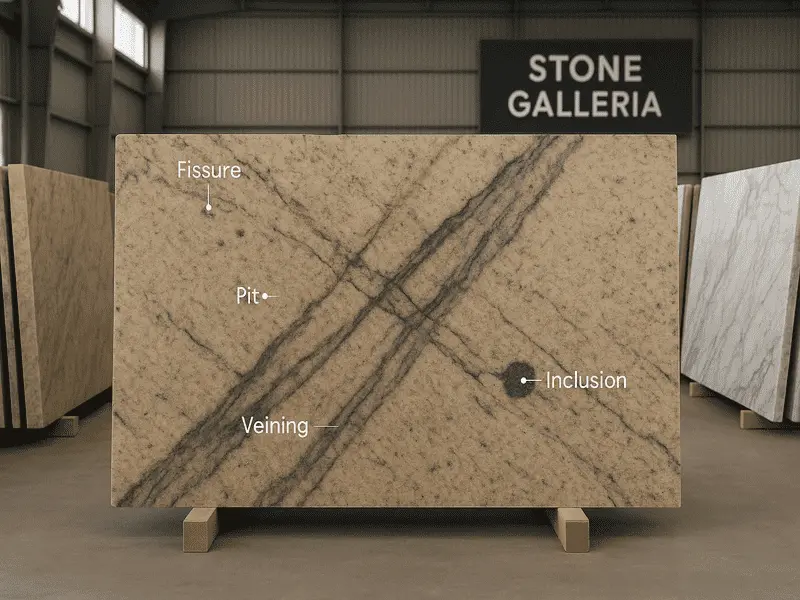
So in short, granite is a porous natural stone. It has a degree of porosity that varies depending on its variability and the presence of natural fissures and cracks.
ALSO READ | Pits, Cracks, and Fissures in Granite: What They Mean
Key Points:
- Micro-Porosity: Granite contains microscopic pores that can absorb liquids.
- Variability: The porosity of granite can differ based on its geological formation and the specific minerals present.
Now that we understand granite’s porosity, the next question that naturally arises is: “Is granite permiable since its porous?”
Is Granite Porous And Permeable?
Granite is porous, meaning it has small openings or pores within its structure that can absorb liquids and gases to some degree. However, unlike materials such as soil or concrete, granite is not permeable in the sense that it allows liquids to pass through easily. When properly sealed, granite forms a protective barrier that greatly reduces its porosity, making it highly resistant to liquids penetrating through the surface. This quality is particularly advantageous for applications like kitchen countertops, where spill resistance and ease of cleaning are important considerations.
ALSO READ | Is Granite Food Safe? Exploring the Health Risk of Granite in Countertops and Cookware
Given that granite is porous but not permeable, the next question is: “To what extent is granite porous?”
How Prorus is Granite?
Granite is considered to have low to medium porosity. This means it absorbs liquids at a slower rate compared to more porous stones like marble or limestone, but it still requires sealing to minimize staining risks. In comparison to other natural stones, granite typically ranks lower on the porosity scale, making it a popular choice for countertops and surfaces where durability and stain resistance are important considerations.
ALSO READ | Does Granite Stain? Understanding the Risks, Prevention & Solution
Here’s a comparative table showing the relative porosity of granite compared to some other natural stone alternatives:
| Natural Stone | Porosity Level | Notes |
|---|---|---|
| Granite | Low to Medium | Requires sealing for stain resistance. |
| Marble | High | Very porous; prone to staining. |
| Limestone | Medium to High | Porous; requires regular sealing. |
| Slate | Low | Generally less porous than granite. |
| Quartzite | Low | Lower to granite in porosity. |
| Soapstone | Low to Medium | Low porosity; minimal sealing needed. |
This table provides a general overview of how granite compares in terms of porosity with other common natural stone options. Keep in mind that the porosity level can vary within each type of stone based on its specific composition and density.
What Factors Determins The Porosity Of Granite?
Granite’s porosity, or ability to absorb liquids and gases, is influenced by several factors. These include its mineral composition, crystal structure, natural fissures, and density. The types and proportions of minerals present in granite, along with how tightly or loosely packed its crystals are, determine its overall porosity. Natural cracks and fissures formed during the stone’s geological history can also contribute to its porosity. Understanding these factors helps in selecting the right type of granite for various applications, ensuring both aesthetic appeal and practical durability.
ALSO READ | Density of Granite: Detailed Exploration
How Can You Protect Your Granite?
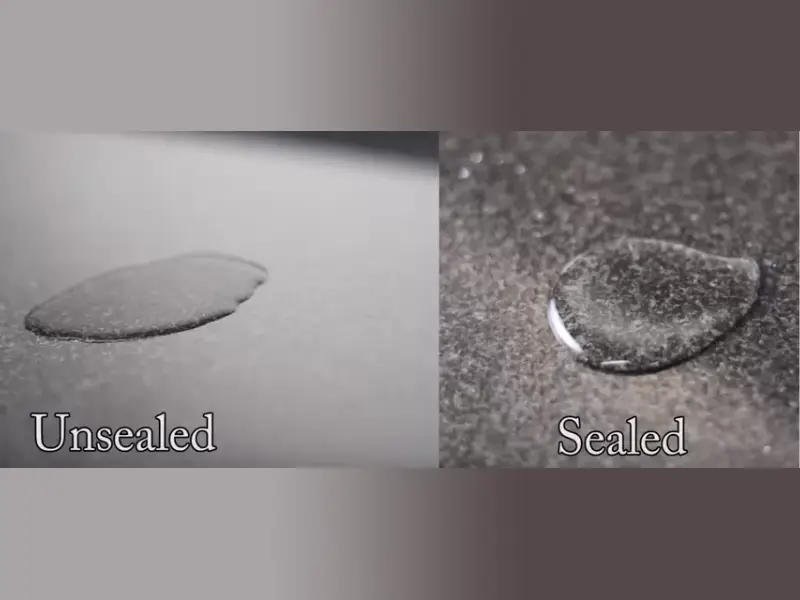
Wondering how to protect your granite? While granite can absorb liquids, there’s a straightforward solution: sealing. Sealing your countertop closes off its pores, preventing liquids from seeping into the stone and causing stains. It’s an essential step for maintaining the beauty and durability of your granite.
Sealing is quick and easy, often done with user-friendly spray sealers available on the market. Typically, you’ll need to re-seal your granite about once a year, though some types may require more frequent sealing. Compared to many other natural stone options, granite requires less frequent re-sealing, making it a practical choice for busy kitchens and bathrooms.
There are various sealers designed specifically for granite countertops, ensuring you can find one that suits your needs and preferences.
How Do You Know If Your Granite Need To Be Re-sealed?
It’s common practice for granite to be sealed by the installation team upon initial installation. The next question that naturally arises is how to determine if your granite needs to be re-sealed. There are several methods to check this, but the simplest and most effective method is performing a water test.
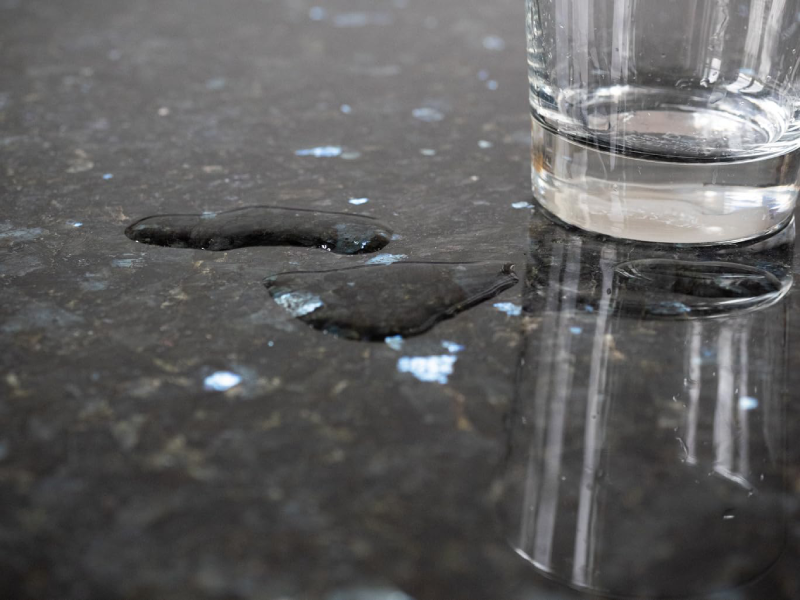
Water Test of Granite
- Sprinkle a few tiny drops of water on the surface of the granite.
- Observe how the water behaves:
- If the water beads up and remains on the surface without being absorbed, the sealant is still effective.
- If the water darkens the granite or is absorbed within 10-15 minutes (forming a dark spot), it indicates that the sealant may be wearing off and the granite is absorbing moisture.
The water test is straightforward and can be performed quickly to assess whether your granite need re-sealing. It gives a direct indication of the porosity of the granite surface and the effectiveness of the sealant in protecting against stains and moisture absorption.
Is Sealed Granite Porous?
Sealed granite has a lower level of porosity compared to unsealed granite, thanks to the protective barrier created by the sealant. However, even sealed granite is not completely non-porous; it still has some level of porosity, albeit significantly reduced. Periodic re-sealing helps maintain this protective layer and enhances the granite’s resistance to stains and moisture absorption over time.
Check out Stone Galleria to explore a variety of beautiful Indian granites for your next project!