
 Fact Checked
When it comes to choosing the natural stone for any use, the choices are wide, ranging from granite to marble, slate, sandstone, and more, with many engineered stone options available as well. This makes choosing the right stone for its intended use confusing, and then we have another natural stone choice called “Kota Stone” - a stone found in a very limited area of India and nowhere else in the world. Which makes us compare Kota stone vs. granite.
But why only Kota stone vs. granite? The answer is simple, Kota stone and granite are the closest in practical use and price. Kota vs Granite is the most logical and relatable comparison for buyers, architects, and builders who want to choose between two natural, long-lasting flooring stones.
Granite
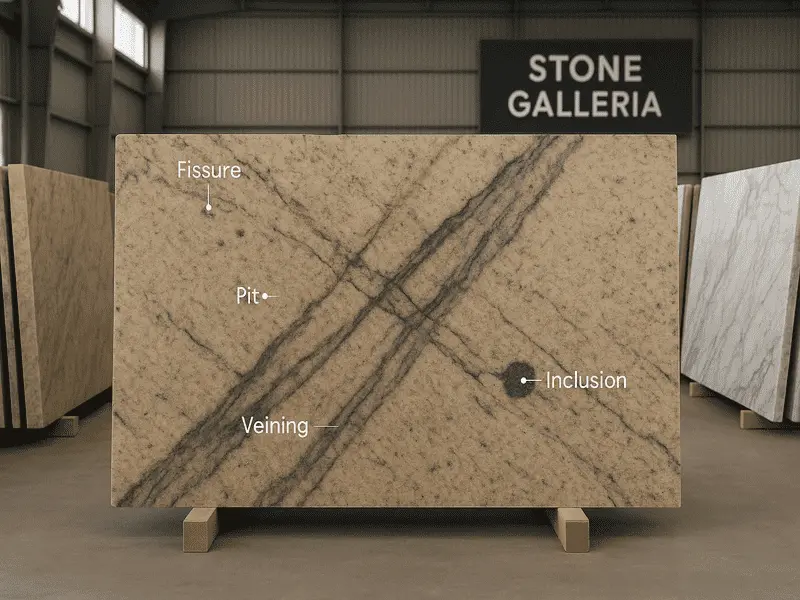
- Granite is an igneous rock made of quartz, feldspar, mica etc.
- One of its key physical properties: hardness of about 6–7 on the Mohs scale.
- Low porosity (i.e., doesn’t absorb much water/liquid) in good quality granite.
Pros of Granite over Kota Stone:
- Durable: Handles heavy traffic, and mechanical wear well. The mineral composition gives it scratch and abrasion resistance.
- Wide colour & pattern range: Good for design-flexibility (for ex: countertops, wall cladding, premium floors).
- Excellent for indoor high-use zones (kitchens, halls) because of strength & durability.
- Low water absorption means less chance of moisture-related damage.
Cons / Considerations of Granite against Kota Stone
- Higher cost compared to many other natural stones (like Kota stone).
- Polished granite surfaces can be slippery, especially when wet — something to watch for in bathrooms/outdoors.
- Although low porous, granite still needs sealing/maintenance (especially around edges, joints) to maintain appearance and performance.
- Heavy material — cost of quarrying, transport, installation higher; for big slabs weights and structural support matter.
Use Case of Granite
- Flooring indoors, large lobby areas.
- Kitchen countertops / vanities.
- Wall cladding, feature elements where you want “high end” finish.
- Exterior applications (subject to correct finish and climate) in many cases.
Kota Stone
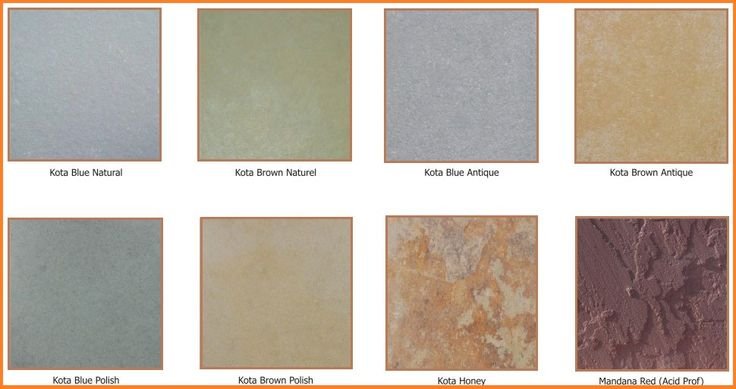
- Kota Stone is a fine-grained variety of limestone quarried in the Rajasthan region (especially the district of Kota, Ramganj Mandi) in India.
- It is sedimentary (limestone) in origin, unlike granite which is igneous.
Pros of Kota Stone Over Granite
- Cost-effective: Generally much more affordable natural stone, especially suitable for large floor areas when budget matters.
- Good for non-slippery surfaces (especially in rough/unfinished state) — this makes it suitable for outdoor, wet areas, verandahs, terraces.
- Natural, earthy look — can suit rustic or semi-commercial / institutional applications.
- Keeps cooler underfoot (in Indian climate) compared to some other floorings — a plus for client comfort.
- Widely available (in the Rajasthan region you’re based in) which may help logistics/lead time.
Cons / Considerations of Kota Stone Compare to Granite
- Less hard / less scratch resistant compared to granite: one source says Kota “softer and susceptible to surface flaking”.
- More porous / more susceptible to staining / discolouration, especially if not sealed well.
- Doesn’t offer the high-gloss premium finish like polished granite — more rustic finish. If a high-end aesthetic is required, might not match granite.
- Big slabs / large formats may be challenging (because of brittleness / fewer large sizes).
Popular Use Case of Kota Stone
- Large flooring areas where budget is key: e.g., commercial spaces, schools, institutions.
- Outdoor use (balconies, terraces, garden pathways) where non-slip and cool underfoot is beneficial.
- Matching Indian climate / using local availability (which may give logistic cost advantage).
- When rustic or understated aesthetic is fine, rather than ultra-luxury polished look
Granite vs Kota Stone Strength
When selecting natural stone for any space — whether it’s a home, office, or outdoor area — understanding the strength of the material is just as important as its color or finish. Strength defines how well a stone performs under real-life conditions like weight, pressure, and daily wear.
Checking the strength of Granite and Kota Stone helps you choose better — balancing aesthetics, function, and long-term value.
| Property | Granite | Kota Stone |
| Density (Compactness / mass per volume) | 2.6 – 2.9 g/cm³ | 2.4 – 2.6 g/cm³ |
| Compressive Strength (Resistance to crushing) | 1000 – 2500 kg/cm² (very high) | 500 – 700 kg/cm² (moderate) |
| Flexural Strength (Resistance to bending) | 100 – 250 kg/cm² | 30 – 50 kg/cm² |
| Hardness (Mohs Scale) | 6 – 7 | 3 – 4 |
| Impact Resistance | Excellent — resists cracking, chipping, and pressure from heavy loads. | Fair — may chip or flake under high pressure or impact. |
| Scratch Resistance | Very high (can resist metal and heavy object scratches). | Low to moderate (softer surface, can scratch easily). |
| Water Resistance/Porosity | Low absorption, typically <0.5% — ideal for wet areas. | Moderate absorption 1–3% — not ideal for continuously wet conditions. |
| Durability in Heavy-Traffic Areas | Excellent; lasts decades with minimal wear. | Moderate; can wear or lose polish in long-term use. |
- As per data published by the Indian Bureau of Mines and Rajasthan State Geology Department, granite generally exhibits 2–3 times higher compressive strength than Kota limestone.
- Independent test data (IS 1121:1974) consistently shows granite’s compressive strength between 1000–2500 kg/cm², compared to 500–700 kg/cm² for Kota Stone.
Even though Kota Stone is thicker (25 mm) in most projects, a thinner 16 mm Granite slab can bear 2–3 times more pressure before cracking — much like comparing a dense metal sheet to a thicker piece of wood.
Kota Stone Price Per Square Foot vs Granite
When it comes to pricing, we need to keep in mind that both of these natural stones are quite different from each other and the comparison is not fair. Still, to get a sense of value, let’s compare them briefly.
The price of any natural stones depends on quality, finish, thickness and transport cost between origin and destination.
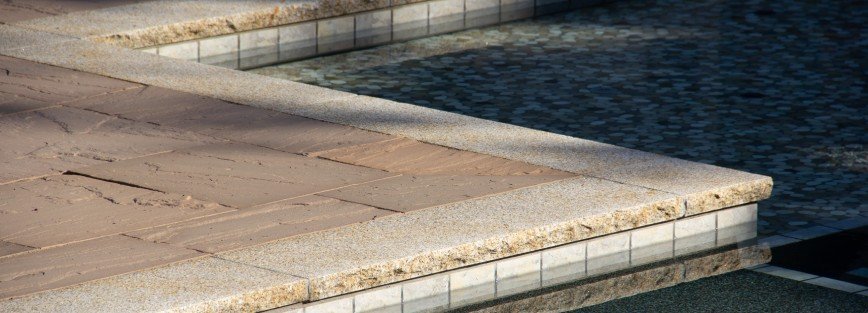
On the price front it is only fair that Kota stone can be compared only to entry level granite. While the commercial quality polished granite starts (Ex. Work Rajasthan) INR 45 square foot while polished kota stone could be 35 per square foot of similar quality but at much higher thickness of 25 mm against granite thickness of 16 mm.
The price gap between granite and Kota is quite substantial, in order to make right decision, all consideration is required from aesthetics, durability, use case, budget etc.
Explore: Rajasthan Granite Price List - Thickness, Finish Wise
Quick Comparison Table: Granite Vs Kota Stone
There is quick comparison between 2 natural stones often competing against each other especially in India for flooring material. Below is a quick snapshot comparing key differences between Granite and Kota Stone:
| Feature | Granite | Kota Stone |
| Type of Stone | Igneous rock (formed from cooled magma). | Sedimentary rock (limestone, formed from calcium deposits). |
| Hardness / durability | Very high (Mohs ~ 6-7) | Moderate; softer since limestone origin (Mohs ~ 3-4) |
| Porosity / water absorption | Low (good) | Higher/more variable; needs proper sealing to avoid staining |
| Cost | Relatively Higher | Budget-friendly |
| Colours and Asthetics | Wide Range of Colours and Pattern | Limited colour options; 3-4 (Blue, Brown, Grey & Yellow) |
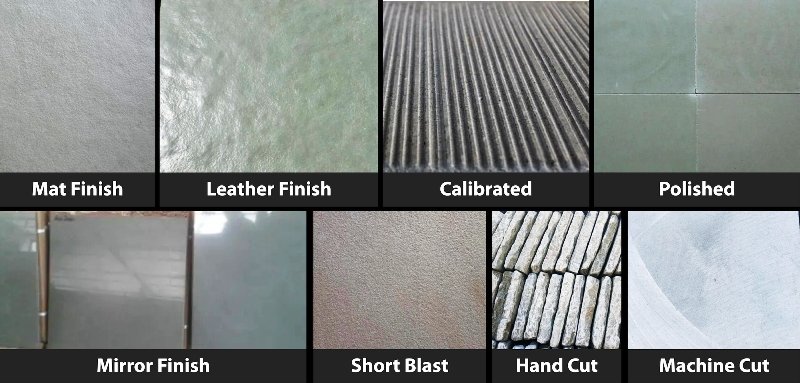
| Finish Options | Many finishes available from polished to textured | finish more rustic (Polished, Unpolished, Natural finish) |
| Best for | Interiors, countertops, exteriors, high wear areas | Large area flooring, outdoor areas, budget applications |
| Main Drawback | Cost, slippery when polished | Flaking, size limitations, polishing & high sealing requirement |
| Slip Resistance | Polished surface can be slippery; flamed or leather finish improves grip.
| Naturally non-slip, especially in rough or semi-finished form. |
Both are excellent natural stone choice — it really comes down to use case and budget. For luxury homes, lobbies, and kitchen tops, granite is go to choice. For large outdoor (also indoor) areas or cost-effective flooring, Kota Stone is the better choice.
Which One Should You Choose?
Granite and Kota Stone both bring their own strengths. Choose Granite for luxury interiors, high traffic areas, and long-term durability. Choose Kota Stone when you need cost-effective, non-slip, and cool flooring for outdoor or large spaces.
Granite wins on strength and durability
- It’s formed deep in the earth under heat and pressure (igneous origin).
- So, it’s naturally denser, harder, and more resistant to load, scratches, and water.
- That’s why even a thinner slab of granite performs better structurally.
But —
Kota Stone wins on practicality and comfort
- It’s a limestone, so it’s softer, cooler, and easier to work with.
- Feels pleasant underfoot, especially in hot climates.
- Costs less and offers a rustic charm that granite can’t replicate.
- And its non-slip surface is a big safety advantage for verandahs, terraces, and outdoor use.
If you’re still unsure which stone suits your project better, our team at Stone Galleria™ can guide you through the options, finishes, and best uses based on your space and climate.
Read Other Stone Comparisons to Make an Informed Choice
- Natural Stone vs Engineered Stone: A Comprehensive Comparison
- Granite vs Tiles: Pros, Cons, Costs, and Longevity Explained
- Granite vs. Corian: A Comprehensive Guide to Choosing the Right Surface
- Granite Vs. Marble: Similarities and Differences between Granite and Marble
- Granite vs. Quartzite: Comparing Two Titans of the Natural Stone World
- Quartz vs Quartzite: Key Differences, Pros & Cons, and Which Is Better for Countertops