
 Fact Checked
In recent years, granite has surged in popularity as the top choice for various areas of homes, including kitchen countertops, flooring, and steps. Renowned for its natural beauty, granite also boasts exceptional durability, withstanding heat, moisture, stains, and everyday wear and tear with remarkable resilience.
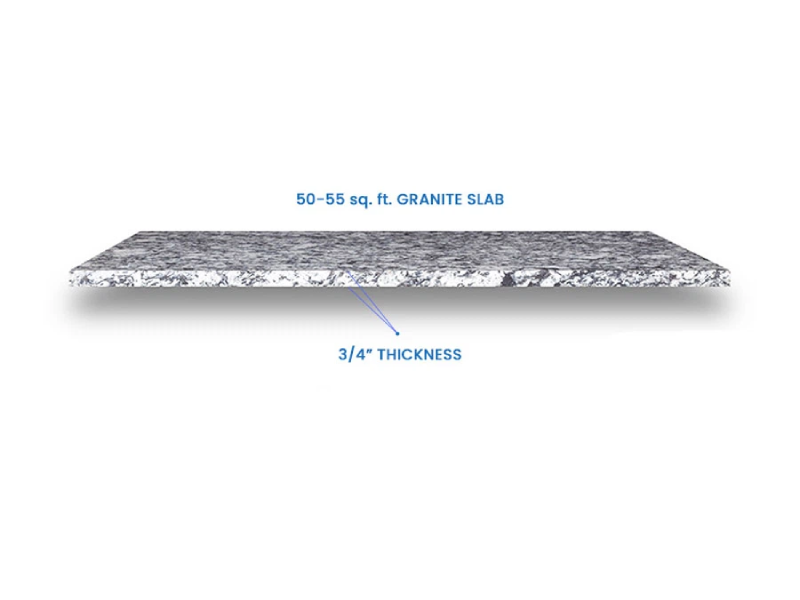
Yet, amidst its numerous advantages, it’s crucial to acknowledge one notable characteristic: its weight. Granite ranks among the heavier stones used in construction, and this factor warrants consideration. Unlike natural materials like wood, granite slabs contain no air pockets, resulting in greater density and weight.
In this post, we’ll delve into everything you need to know about the weight of granite slabs, exploring its significance in transportation, installation, and overall project planning. Understanding the weight of granite is essential for ensuring successful outcomes in your construction or remodelling endeavours.
Why Is It Important To Know The Weight Of Granite Slabs?
Knowing the weight of granite slabs is important for several reasons:
Transportation: Granite slabs are heavy, and knowing their weight helps in planning transportation logistics. Whether you’re moving the slabs from the quarry to your site or from the supplier to your home or project site, understanding the weight ensures you have the appropriate equipment and vehicles to handle the load safely.
READ | How Many Granite Slabs or Sq Ft. A Shipping Container Can Hold?
Handling and Installation: Granite slabs need to be handled carefully during installation to prevent damage and ensure safety. Knowing the weight helps installers prepare for lifting and manoeuvring the slabs safely. It also ensures that proper lifting equipment, such as cranes or hoists, is used when necessary.
Structural Considerations: If you’re installing granite slabs as countertops, wall cladding, or flooring, the weight of the slabs can impact the structural integrity of the building or surface. Understanding the weight allows builders and engineers to assess whether the structure can support the load adequately.
Cost Estimation: Transportation and handling costs are often based on weight. Knowing the weight of granite slabs helps in estimating the overall project costs accurately. It also allows for better budgeting and cost planning.
READ | How Many Granite Slabs or Sq Ft. A Shipping Container Can Hold?
Safety: Handling heavy materials like granite slabs can pose safety risks if not done correctly. Knowing the weight helps in implementing proper safety measures to prevent accidents and injuries among workers and bystanders.
What Factors Determine The Weight Of Granite Slabs?
Several factors influence the weight of granite slabs, including:
Thickness: Thicker granite slabs naturally weigh more than thinner ones. Slabs are available in various thicknesses, such as 2 centimetres (cm), 3 cm, or even thicker options. The thickness you choose will directly impact the weight of the slab.
Size: Larger granite slabs weigh more than smaller ones due to the increased surface area. Standard slab sizes can vary, but common dimensions include 120 inches by 60 inches or larger.
Granite Density: The density of the specific granite variety affects its weight. Some types of granite are denser than others, resulting in heavier slabs. The density of granite typically ranges from 2.63 to 2.75 grams per cubic centimetre (g/cm³).
Water Content: The water content within the granite slab can also impact its weight. Some slabs may have higher water content due to factors like porosity, which can increase their weight.
Mineral Composition: The mineral composition of the granite can influence its weight. Variations in mineral content, such as the presence of quartz, feldspar, and mica, can affect the overall density and weight of the slab.
Finishing: Different granite finish types, such as polished, honed, or flamed finishes, can slightly alter the weight of the granite slab. However, the effect of finishing on weight is typically minimal compared to other factors.
Transportation: While not directly related to the intrinsic weight of the granite slab, transportation considerations, such as packaging materials and handling equipment, can affect the total weight being transported.
READ | How Many Granite Slabs or Sq Ft. A Shipping Container Can Hold?
By considering these factors, contractors, builders, and homeowners can better anticipate and manage the weight of granite slabs for transportation, handling, and installation purposes.
How Do Granite Suppliers Determine The Weight Of Granite Slabs?
Granite suppliers typically determine the weight of granite slabs by first assessing the density of the granite through laboratory testing. This involves analyzing samples of the granite to determine its density, which is a measure of its mass per unit volume. Once the density is known, suppliers can then calculate the weight of a particular slab based on its dimensions. By combining the density data with the slab dimensions, suppliers can ascertain the exact weight of the granite slab with a high level of precision. This ensures that customers receive accurate information about the weight of the granite slabs they are purchasing.
.webp)
Measuring Granite To Know Square Foot
READ | Granite Slab Measurements: How to Measure it Yourself
Weight Of Granite Slab Per Square Foot
Determining the precise weight of a granite slab for kitchen countertops, stairs, or flooring can be challenging due to variations in layout and space requirements. Instead, granite is typically measured in square feet, which is a globally accepted unit of measurement. The thickness of the granite slab is a critical factor to consider, as thicker slabs are denser and consequently weigh more without increasing the square footage.
Most granite slabs are typically either 2 centimetres (cm) thick or 3 centimetres (cm) thick. While there are thicker granite slabs available, they are less common and tend to be more expensive.
Read | Granite Price Per Square Foot – Understanding Factors
A typical granite countertop is usually 2 centimetres (cm) thick, which equates to a weight of approximately 5.9 kilograms per square foot (kg/sqft). However, if the thickness is increased to 3 centimetres (cm), the weight per square meter can increase to around 8.9 to 9.8 kilograms (kg/sqft). In some instances, buyers may opt for a 5 centimetres (cm) thick granite slab, which can weigh up to 14.5 kilograms per square foot (kg/sqft).
To accurately estimate the weight of your granite for your project, it’s essential to utilize a reliable granite weight calculator. These calculators consider factors such as thickness, size, and density to provide precise weight estimations.
However, this weight can vary depending on the specific characteristics of the granite slab. It’s best to consult with your supplier or manufacturer for the exact weight of the granite slab you are considering.